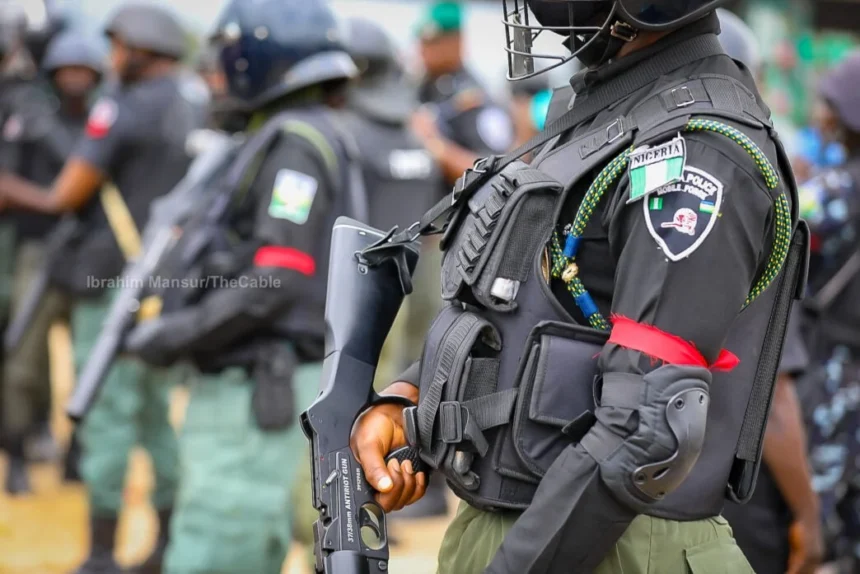
No fewer than 31 state governments spent an estimated N252.26bn on security-related activities in the first six months of 2026, despite persistent killings, kidnappings, banditry and other criminal activities across the country.
An analysis of Q1 and Q2 budget performance reports obtained from Open Nigerian States, a BudgIT-backed repository of government budget data, showed that Kogi recorded the highest expenditure at N34.67bn, followed by Plateau with N23.69bn and Bauchi with N22.35bn.
The three states collectively accounted for about N80.70bn, representing 32 per cent of the total expenditure captured in the data. Other major spenders included Bayelsa with N17.49bn, Ekiti with N14.83bn, Anambra with N13.40bn, Sokoto with N11.27bn, Ondo with N10.54bn and Kaduna with N10.37bn.
The expenditure covered security equipment, homeland security personnel, security votes and operations, ministries of security or special advisers, and security trust funds.
Overall spending increased substantially from N75.84bn in 2025 to N252.26bn in 2026. However, a like-for-like year-on-year comparison involving only 22 states with available 2025 figures showed expenditure rising from N75.84bn to about N144.44bn, representing an increase of approximately 90.5 per cent.
Security votes and related homeland security expenditure accounted for the largest share, rising from N47.67bn to N135.61bn. Spending under ministries of security and special advisers also increased from N14.95bn to N42.15bn, while security trust fund expenditure rose from N6.82bn to N10.53bn.
The increased spending came amid continued insecurity nationwide.
The National Human Rights Commission reported 651 kidnapping incidents and 492 killings between January and March 2026, while a SARI Global report cited by newsmen recorded 792 deaths in 882 security incidents across the 36 states and the Federal Capital Territory in June alone.
The figures show that security expenditure was concentrated in a relatively small number of states. The top five spenders—Kogi, Plateau, Bauchi, Bayelsa and Ekiti—accounted for about N112.15bn, or 44.8 per cent of the total captured.
However, high expenditure did not always correspond with the states facing the most severe security threats. Zamfara, Borno, Katsina, Kaduna, Sokoto and Kebbi, which have experienced significant banditry and insurgency, collectively spent about N56.04bn, while Kogi alone recorded N34.67bn.
The year-on-year figures also showed sharp increases in some states. Anambra’s security expenditure rose from N22.10m in 2025 to N13.40bn in 2026, while Zamfara increased from N785.90m to N9.07bn. Kwara also rose from N315.79m to N4.69bn.
Some states recorded declines. Oyo’s expenditure fell from N6.76bn to N3.82bn, while Taraba dropped from N2.58bn to N1.38bn and Borno declined from N9.56bn to N8.29bn.
Retired Brigadier-General Bashir Adewinbi described the increased funding as a step in the right direction but cautioned that the effectiveness of the expenditure would depend on implementation.
“Let us give them a chance and see how things unfold—time will tell. It is a step in the right direction,” he said, stressing the need for dedicated resources and technology to tackle terrorism and other security threats.
A former Assistant Inspector-General of Police, Wilson Inalegwu, however, advocated result-based budgeting, urging governors to stop making large lump-sum security allocations without clear plans and measurable targets.
Inalegwu said each state should have an annual policing plan identifying its major security threats, the resources required and specific targets for reducing crime. He also called for quarterly reviews involving governors, security advisers and commissioners of police to assess whether spending was producing results.
Civil society groups also demanded greater accountability. The Executive Chairman of the Centre for Anti-Corruption and Open Leadership, Debo Adeniran, and the Executive Director of the Civil Society Legislative Advocacy Centre, Auwal Musa Rafsanjani, questioned how the funds were being utilised, arguing that increased spending should translate into better protection, improved equipment and stronger welfare for security personnel.
The figures therefore highlight a sharp expansion in state-level security financing, but also raise questions about transparency, coordination and value for money.
With insecurity continuing despite the increased expenditure, experts and civil society organisations say governments must link security funding to clearly defined outcomes and ensure that citizens can see measurable improvements in safety.