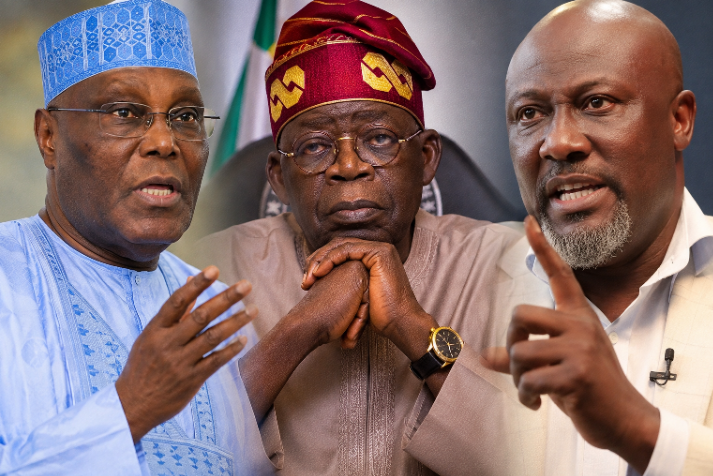
Former lawmaker, Senator Dino Melaye, has accused President Bola Tinubu of allegedly taking money from Nigerians through the removal of fuel subsidy and giving the proceeds to state governors.
Melaye made the allegation while reacting to the renewed debate over the Federal Government’s fuel subsidy removal policy, following the pledge by former Vice President and presidential candidate of the African Democratic Congress (ADC), Atiku Abubakar, to restore the subsidy if elected president in the 2027 general election.
According to Melaye, the governors who have benefited from increased allocations following the subsidy removal cannot guarantee Tinubu’s re-election in 2027.
“You took money away from Nigerians in the name of subsidy removal and gave it to the governors in return for their votes and support,” Melaye said in a post on Facebook.
He added that the President was now asking Nigerians to hold their governors accountable after realising that the governors might not be able to secure his re-election.
“Now the election is almost here and you realised that the governors can’t deliver you, and you’ve now come back to ask Nigerians, the same people you took away monies from their pockets, to go and hold the governors accountable,” he added.
The development comes amid growing criticism of the economic policies of the Tinubu administration, particularly the removal of fuel subsidy and the measures introduced to cushion its impact on Nigerians.
Atiku has also questioned the Federal Government’s claim that about N600 billion in cash transfers was disbursed to 10 million households as part of its poverty-alleviation measures.
The former Vice President challenged the government to provide verifiable evidence of the disbursement, raising questions over the beneficiaries and transparency of the programme.
Atiku’s position has added another dimension to the controversy surrounding the subsidy policy, as he has vowed to restore fuel subsidy if elected president in 2027.
The ADC presidential candidate has maintained that Nigerians should be provided with clear evidence and accountability for government interventions designed to cushion the effects of economic reforms.
The subsidy debate is expected to remain a major issue ahead of the 2027 general election, with opposition parties and candidates likely to make the cost of living, fuel prices, social intervention programmes and government spending key campaign issues.