Burkina Faso, Mali and Niger have turned their break with ECOWAS into a broader experiment in regional sovereignty. But whether the new alliance can deliver greater security, economic resilience and political stability remains the bigger test.
By Our Editorial Desk
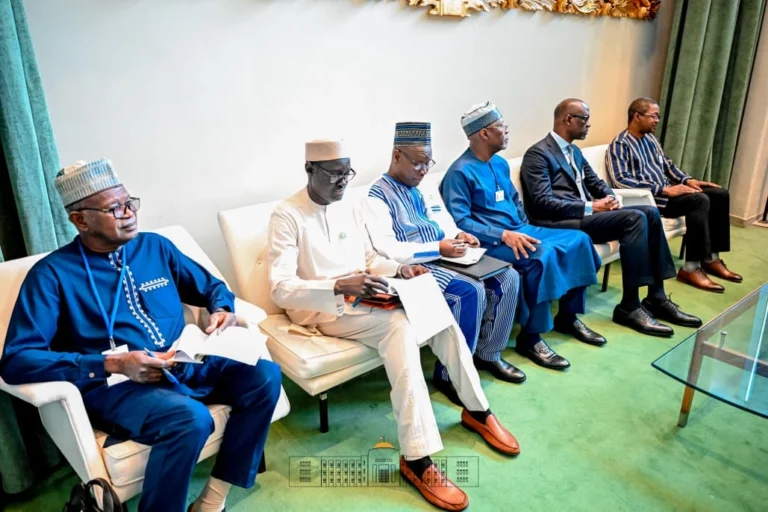
The meeting in New York between the foreign ministers of Burkina Faso, Mali and Niger and Burundi’s President Évariste Ndayishimiye, the current Chairperson of the African Union, should not be viewed merely as another diplomatic engagement on the sidelines of the United Nations General Assembly. It comes at a defining moment for West Africa, where the three Sahelian states are attempting to redefine their relationship with the continent’s established political and economic institutions.
The Alliance of Sahel States, comprising Burkina Faso, Mali and Niger, has already moved beyond a loose security arrangement. Its members formally withdrew from the Economic Community of West African States (ECOWAS) on January 29, 2025, after announcing their intention to leave in January 2024. ECOWAS subsequently kept channels for trade, movement and dialogue open in order to prevent the withdrawal from immediately disrupting the lives and businesses of citizens.
The question, therefore, is no longer whether the separation will happen. It has happened. The more important question is why did the three countries insist on leaving, and could earlier, more proactive engagement by the African Union and ECOWAS have prevented the rupture?
Why the insistence on separation?
The immediate political background was the military takeovers in the three countries. Mali experienced coups in 2020 and 2021, Burkina Faso in 2022 and Niger in 2023. Their military-led governments increasingly came into confrontation with ECOWAS over demands for a return to constitutional civilian rule.
The confrontation became particularly serious after the Niger coup, when ECOWAS imposed sanctions and threatened military intervention to restore President Mohamed Bazoum. The three Sahelian governments interpreted the regional bloc’s response as pressure on their sovereignty rather than simply an effort to enforce constitutional order.
Their own explanation, however, goes beyond the coups.
The governments of the three countries have repeatedly argued that ECOWAS has failed to provide an adequate response to the insecurity confronting the Sahel, while giving external powers too much influence over regional affairs. Niger’s military government, for example, described withdrawal as part of a process of recovering “full sovereignty” and linking sovereignty to national security and development.
Burkina Faso’s leadership has similarly presented the AES as a mechanism for coordinating the fight against terrorism and resisting what it describes as external influence.
There is, therefore, a clear political calculation behind the separation: the three governments want greater freedom to determine their security partnerships, foreign policy and political direction without ECOWAS sanctions or intervention being used as leverage.
But there is another dimension that should not be overlooked. The withdrawal is also an attempt to turn a common political grievance into a new regional structure. It also raises a difficult question for both ECOWAS and the African Union: whether earlier, more sustained engagement on security, governance and sovereignty might have addressed the grievances before they hardened into a demand for separation.
From alliance to confederation
The three countries did not simply walk away from ECOWAS and leave a vacuum behind.
They had already established the Alliance of Sahel States through the Liptako-Gourma Charter in September 2023. In July 2024, they went further, signing the treaty establishing the Confederation of the Alliance of Sahel States in Niamey. The confederation was designed to coordinate defence, diplomacy and development.
That move is significant.
The AES is attempting to create institutions that can perform some of the functions normally associated with regional integration. Its agenda has included coordinated diplomacy, common security arrangements, economic cooperation and shared development initiatives.
The three states have also introduced AES identity and travel documents. By 2025, the confederation had begun developing its own institutional identity, including a flag, anthem, logo and other common symbols, while plans for a confederal investment and development bank were also being advanced.
In July 2026, the defence ministers of the three countries approved the legal framework for an AES Unified Force, marking another step towards integrated military cooperation and cross-border operations.
This is perhaps the clearest indication that the withdrawal from ECOWAS is not being treated by the three governments as a temporary diplomatic protest. They are attempting to construct an alternative regional framework.
But has the separation solved the security problem?
This is where the argument becomes more complicated.
The central justification offered by the AES governments is security. Burkina Faso, Mali and Niger have all suffered serious jihadist violence and attacks by armed groups. Their governments argue that closer military coordination can produce a more effective response.
There have been steps towards joint operations and the integration of their security structures. The AES has described its security territory as a common operational space, while the three governments have moved towards a unified force.
Yet the existence of a new military framework does not automatically mean that the underlying security crisis has been resolved.
Academic research has warned that the break with ECOWAS could weaken wider regional security cooperation by reducing intelligence-sharing and coordinated strategies between AES states and their former regional partners.
That is an important distinction. The AES may have gained greater control over its own security decisions, but terrorism does not respect political borders. Armed groups operate across frontiers, while trafficking, displacement and insecurity can move between the Sahel and coastal West Africa.
The danger is therefore that political separation could become security fragmentation unless cooperation across the wider region is maintained.
The economic question may prove even harder
The withdrawal also carries an economic cost-benefit equation that cannot be settled by political rhetoric.
ECOWAS has spent decades developing mechanisms for free movement, trade liberalisation and regional economic cooperation. The departure of three landlocked economies therefore creates additional uncertainty over customs arrangements, transport corridors, investment and cross-border commerce.
ECOWAS itself has tried to limit disruption. Following the formal withdrawal, it announced that citizens of Burkina Faso, Mali and Niger would continue, until further notice, to benefit from visa-free movement arrangements, while their goods and services would continue receiving treatment under the regional trade-liberalisation framework.
That decision is important because it shows that the separation is not absolute in practical economic terms.
Recent economic modelling also suggests that the immediate effects may be mixed rather than uniformly damaging. One 2026 study found that changes in trade patterns could redirect some commerce toward other markets, while another found that household consumption, income and investment could remain broadly stable in the short term, although transport, livestock and some services could face contractions.
For the AES, the longer-term challenge is therefore clear: political sovereignty must eventually be matched by economic capacity.
A country can reject an external institution, but it cannot escape the realities of geography. Burkina Faso, Mali and Niger remain neighbours of ECOWAS countries. Their roads lead through them. Their markets depend on them. Their populations cross those borders. Their economies require access to ports that are largely outside the AES.
The effect on West Africa
The consequences are already visible beyond the three countries.
For ECOWAS, the withdrawal represents a serious institutional setback. Three states have rejected the political direction of the organisation, while other countries must now consider how to maintain regional security and economic integration without leaving a major Sahelian bloc outside the institutional framework.
For the AES, the split has produced greater political cohesion among the three governments. They now speak more frequently through a common diplomatic platform and are developing shared institutions.
For the wider region, however, the picture is more complicated.
West Africa now has a deeper political divide between the AES and ECOWAS. That divide can make coordinated responses to terrorism, migration, organised crime, trade and humanitarian emergencies more difficult.
At the same time, the separation has not completely destroyed communication. ECOWAS has deliberately kept its door open to dialogue, while the AES has continued engaging African institutions.
That is precisely why the New York meeting with the African Union Chairperson matters.
The African Union becomes the bridge
The meeting between the AES ministers and Ndayishimiye offers an opportunity for the African Union to occupy a delicate middle ground.
The AU does not have to erase the differences between the AES and ECOWAS. Nor does dialogue require either side to surrender its political position.
What matters is keeping an African diplomatic channel open.
Ndayishimiye’s position is particularly relevant because his role combines Burundi’s national leadership with his continental responsibility as AU Chairperson. The engagement with the AES therefore sends a message that political disagreements within Africa do not necessarily have to become permanent diplomatic isolation.
For the AES, engagement with the African Union also provides a route to continental legitimacy without requiring a return to ECOWAS.
For the AU, engagement provides an opportunity to prevent the West African divide from becoming a permanent fracture in African integration.
The episode also offers a lesson in preventive diplomacy. Earlier and more proactive engagement by the AU and ECOWAS might not necessarily have prevented the coups or reversed the military governments’ decisions, but it could have created more space to address their security concerns, reduce perceptions of external pressure and preserve channels of trust before the withdrawal became irreversible.
What happens next?
The future of the AES will ultimately be judged less by its declarations than by results.
Can the three countries reduce insecurity?
Can their unified security arrangements protect communities?
Can they maintain trade with coastal West Africa?
Can they attract investment despite political uncertainty?
Can they create effective common institutions without reproducing the bureaucratic weaknesses they criticise in existing regional organisations?
And, perhaps most importantly, can their pursuit of sovereignty coexist with the regional cooperation required to confront problems that no single country can solve alone?
These are the questions that will determine whether the AES becomes a durable model of Sahelian integration or remains primarily a political response to a period of confrontation with ECOWAS.
A separation that has changed the map
Burkina Faso, Mali and Niger did not leave ECOWAS simply to change their diplomatic addresses. Their withdrawal represents a broader attempt to redefine sovereignty, security and regional integration in the Sahel.
They have already taken concrete steps: establishing the AES, creating a confederation, coordinating diplomacy, developing common identity documents, strengthening joint security structures and working towards a unified force.
But independence of decision-making is only one part of sovereignty. The harder part is building institutions capable of delivering security, prosperity and opportunity to ordinary citizens.
That is where the real test of the AES begins.
The New York engagement with the African Union therefore offers something more valuable than symbolism. It provides evidence that, despite the rupture with ECOWAS, the door to wider African dialogue has not been closed. It also underlines a broader lesson: regional institutions must respond to political and security grievances before frustration hardens into separation.