A cabinet minister threatens an opposition campaign, orders striking teachers unpaid, sends bulldozers beside a human-rights office, and calls a naval officer a fool. None of it is gossip. All of it is on the record.
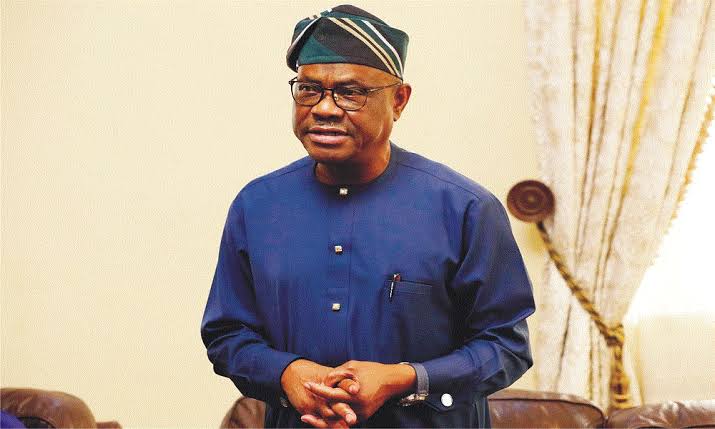
On Friday, October 9, Nyesom Wike stood before reporters in Abuja and did two things in one sitting.
First, he told the African Democratic Congress’s vice-presidential candidate, Rotimi Amaechi, that his campaign in Rivers State would meet resistance. “We will make it difficult for him,” the Minister of the Federal Capital Territory said, over remarks about voters being called mad and thieves. In the same briefing, he urged INEC to punish politicians who use inflammatory language.
Second, he declared that FCT teachers who joined an indefinite strike called by the Nigeria Labour Congress would work without pay, and told the six area council chairmen to enforce it. The strike, he said, was political, and he could not understand its basis.
A minister who asks the electoral commission to police other people’s words, and in the same breath promises to make a rival’s campaign hard, has not misspoken. He has told you how he sees the rules: they are for other people.
The sermon and the threat
Look at what Wike’s own words say. A senior official of the federal government announced that an opposition candidate would find campaigning in a Nigerian state difficult, and it did not trouble him to say it in front of cameras. We found no public rebuke from the Presidency.
The teachers’ dispute shows the same instinct at lower altitude. The NLC FCT council says it met every legal condition, that its strike is lawful, and that the administration’s own vacancy clause has frozen teachers’ promotions. It cites Section 43 of the Trade Disputes Act against Wike’s pay threat, and the teachers’ union told members to shun it. Wike says the senior primary school teachers and others disowned the strike, and that everything was agreed. Perhaps. But the minister’s answer to a labour dispute was a pay threat and the word “political,” not a negotiating table.
“A very big fool”
A video made sure nobody forgot the Gaduwa plot. On November 11, 2025, Wike arrived at Plot 1946, which the FCT Administration says is a buffer zone not approved for development and which belongs to a former Chief of Naval Staff, retired Vice Admiral Awwal Gambo. Soldiers barred his team. A young naval officer, Lieutenant A. M. Yerima, told him he was acting on orders and that the land had been acquired legally.
Wike’s reply was recorded: “You are a very big fool,” he told the officer, according to Daily Trust, and added that when he graduated, the officer was still in primary school. “I am the minister,” he said, in the reported words, “you can’t say that to me.” Yerima answered, repeatedly, that he was not a fool and was a commissioned officer. Minister of State for Defence Bello Matawalle later said Wike should have respected the officer’s uniform, and that he had defied military advice. The Defence Minister, Mohammed Badaru, said any officer on lawful duty would be protected.
In fairness, Wike’s case on the land has weight. His aide said the former naval chief had no title document or building approval, and sent armed soldiers to stop FCT inspectors. If that is true, a retired service chief using soldiers to protect a plot is a scandal in its own right. But being right about the land does not license shouting abuse at a junior officer carrying out an order. The issue is not whether Wike was angry. It is that a minister’s anger became the substitute for an argument.
Bulldozers, revocations, and a president who had to intervene
Wike’s defenders say he is bringing order to a capital city that has long ignored its own rules. There is something to that. In March 2025, he revoked 4,794 land titles over ground rent unpaid for decades. In November, he revoked another 1,095, including plots reported to belong to Patience Jonathan, Ayodele Fayose, Iyabo Obasanjo, T. Y. Danjuma and the Emir of Ilorin. Collecting ground rent is lawful, and Nigeria has under-collected for decades.
But the pattern of the campaign matters. It took the President to slow it: in May 2025, Tinubu paused the revocations and gave the PDP and others 14 days’ grace. Investors in the Abuja Free Trade Zone took the FCT Minister to court over the revocation of their plots.
Now the bulldozers are back in the news. On October 9, the FCT Development Control Department issued a demolition notice around a public utility corridor at Plot 5334 in Maitama, which Amnesty International Nigeria says has been allocated to a private developer, Hammari Energy Limited, for real estate. Amnesty says the corridor holds drainage infrastructure built by Julius Berger between 2012 and 2014, that it warned the minister and the FCDA in May that construction could threaten its own building and flood neighbours, and that the dispute is before the FCT Alternative Dispute Resolution Committee, which it understood was nearing completion. It said bulldozers were moving anyway. In June, it also condemned the demolition of homes in Durumi 3 as a forced eviction that left hundreds of families homeless. These are Amnesty’s allegations, not court findings, and the FCTA has its own account. But the allegation is specific, and it is that a minister is pulling down protective structures while a dispute-resolution process is still open.
Rivers: the man who will not leave the state alone
Wike left the governorship of Rivers State in 2023. Rivers has not been allowed to forget it. His war with his successor, Siminalayi Fubara, over the control of the state’s politics culminated in six months of emergency rule in 2025, with the elected governor suspended. In January this year, he told critics he still controls Rivers votes. In the same fortnight, he told them only Tinubu could sack him. In February, the President reconciled him with Fubara, to mixed reactions.
This month, Reuben Abati said the Minister behaves as if he can dictate to everybody, after Wike’s latest remarks about 2027. Rufai Oseni went further, calling the Minister a reflection of how bastardised the electoral system has become. Whether or not you accept those verdicts, consider the boast that prompted them. A federal minister who is also a former governor claims to control the votes of an entire state. If true, that is a statement about the state of Nigerian elections. If it is bluster, it is bluster from a man with the power of a ministry behind him.
What his defenders say
The case for Wike should be heard in full. President Tinubu has said the FCTA’s exit from the Treasury Single Account helped revive abandoned projects, and that the results are glaring. His supporters point to Abuja’s changed roads. Ground rent was a debt that was owed, and nobody before him collected it so aggressively. He says the teachers’ strike is political and that other unions disowned it. He argues that Amaechi started the insults.
But results are an argument for a minister, not an alibi. The exit from the TSA means the territory’s internally generated revenue is no longer swept into the central account, and the public is entitled to see how it is accounted for. A minister who delivers roads and also abuses a naval lieutenant, threatens a rival’s campaign and answers a strike with a pay threat is not exempt from any of those things because the roads are good.
What Nigerians should demand
Publish the full list of revoked titles, the reasons and the appeals process. Halt the Maitama demolition until the dispute-resolution process is finished and an independent assessment of the drainage corridor is published. Publish the FCTA’s revenue and expenditure since its exit from the TSA. Ask INEC whether a minister’s public pledge to make an opposition candidate’s campaign difficult is consistent with the Electoral Act, and say so publicly. And ask the President whether a cabinet in which one member insults officers, threatens rival campaigns and runs a state’s politics from Abuja is a cabinet that respects the rules it says it enforces.
Arrogance is not a crime. But power that treats every rule as a suggestion, and every critic as an enemy to be made to suffer, tends to grow. Wike is not the first Nigerian official to dance on the edge of his authority, and he will not be the last. What changes that is not his temperament. It is whether anyone in a position to stop him ever does.
This is a United Continental Post editorial. It draws on reporting by Premium Times, ThisDay, Daily Trust, BusinessDay, Vanguard, Tribune, Blueprint, The Whistler, Ripples Nigeria, TheCable, Sahara Reporters, Guardian Nigeria, Naija News and allAfrica, and on statements by FCT Minister Nyesom Wike, the Nigeria Labour Congress FCT council, Amnesty International Nigeria and the Defence Ministry. Amnesty’s claims about the Maitama corridor and Durumi 3 are its own allegations and have not been tested in court. Nyesom Wike has not been charged with any offence in connection with the matters discussed here.