France and Germany have reached a compromise on the future of Europe’s automotive industry, agreeing to ease proposed vehicle emissions requirements while tightening the rules governing the bloc’s “Made in Europe” industrial initiative, in a move that seeks to reconcile economic competitiveness, employment protection and climate ambitions.
The agreement, confirmed on Friday, October 16, comes as Europe’s carmakers confront mounting competitive pressure from Chinese manufacturers, rising production costs and uncertainty over the pace of the transition to electric vehicles (EVs). The two countries, whose automotive industries are central to Europe’s manufacturing base, had differed sharply over how to protect jobs and investment without undermining the European Union’s climate objectives.
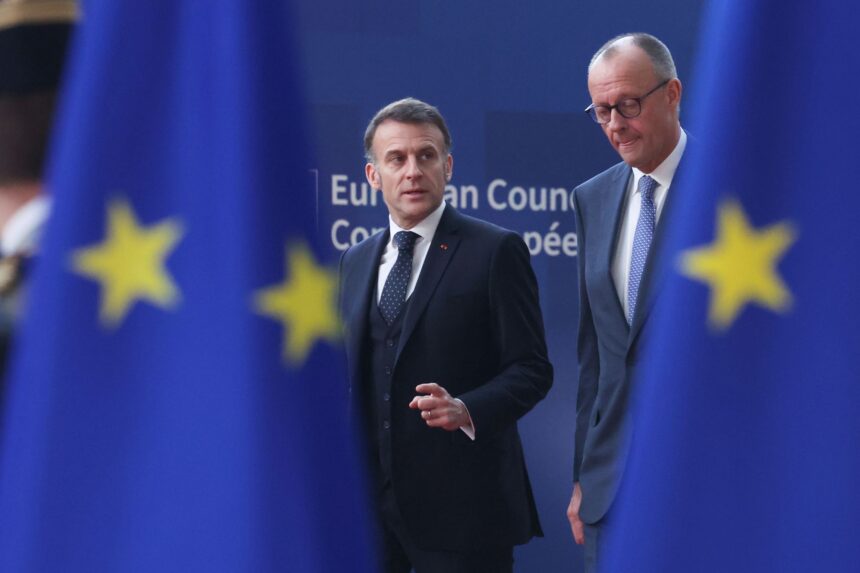
French President Emmanuel Macron said the agreement was designed to transform the automotive industry while preserving climate commitments and industrial production within Europe. German Chancellor Friedrich Merz described the deal as a positive development for motorists, workers and employment across the continent.
The compromise reflects a division of priorities between the two governments. Germany had advocated more flexible emissions targets and a broader interpretation of European production rules that would accommodate important non-EU trading partners.
Meanwhile, France sought to maintain stronger climate commitments and restrict public procurement preferences under the “Made in Europe” initiative primarily to EU member states.
Under the agreement, automakers would find it easier to comply with a proposed EU requirement to reduce exhaust emissions from new vehicles by 90 per cent from 2021 levels by 2035. The deal also narrows the proposed “Made in Europe” framework to the EU’s 27 member states, while allowing selected countries, including Britain and Norway, to participate under certain conditions.
The automotive sector accounts for approximately 13 million jobs and seven per cent of the EU’s gross domestic product, making its future a significant economic and political concern. Supporters of the agreement argue that greater regulatory flexibility and incentives for investment, research, development and European supply chains could help manufacturers remain competitive.
The European Association of Automotive Suppliers welcomed the compromise, describing it as an important recognition of industry concerns. However, environmental campaigners strongly criticised the agreement, warning that easing the transition away from conventional vehicles could weaken Europe’s climate ambitions.
Anna Krajinska, senior director at clean-transport advocacy group Transport & Environment (T&E), called the deal a “historic mistake”, arguing that slowing the shift to electric vehicles would leave European manufacturers more vulnerable to Chinese competition at a time when consumers are already facing high fuel costs.
Despite the agreement between Paris and Berlin, the proposed changes are not yet law. They will require support from other EU member states and the European Parliament before implementation.
The outcome could nevertheless shape Europe’s automotive future, determining how the bloc balances industrial survival, employment, competition and decarbonisation in an increasingly contested global market.