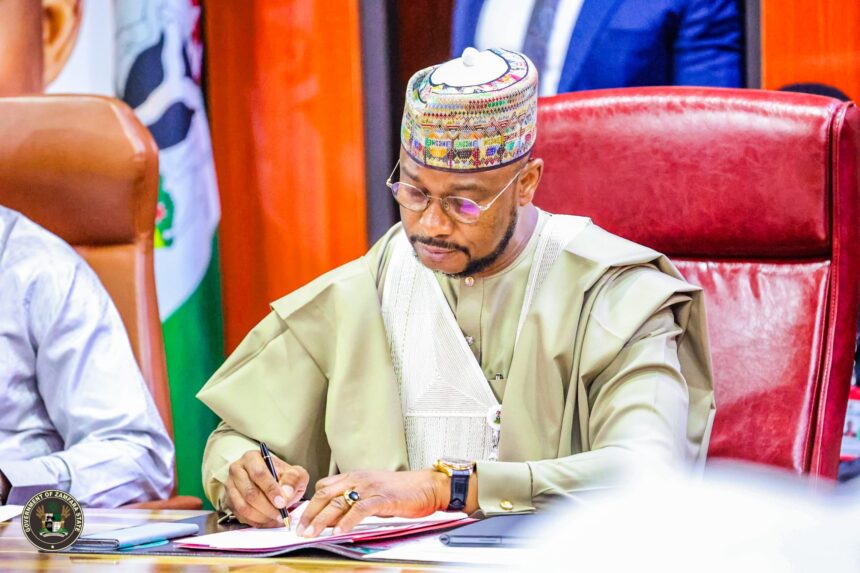
Zamfara State Governor, Dauda Lawal, has reaffirmed his commitment to reviving the state’s textile industry, cotton ginneries and oil mills as part of efforts to generate thousands of jobs and stimulate economic growth.
Governor Lawal pledged to participate in a high-level study tour of the Glo-Djigbé Industrial Zone (GDIZ) in the Republic of Benin. The delegation, led by Vice President Kashim Shettima, visited the integrated industrial hub to examine its agro-processing model and identify strategies that could support Nigeria’s industrialisation agenda.
The industrial zone processes agricultural commodities such as cotton, cashew nuts and soybeans into finished and semi-finished products, providing a model for value addition, manufacturing and export-led growth.
According to a statement issued by the Senior Special Assistant to the Vice President on Media and Communications, Stanley Nkwocha, the visit forms part of Nigeria’s broader efforts to establish Special Agro-Industrial Processing Zones, strengthen domestic manufacturing and create employment opportunities across the country.
Speaking after the tour, Governor Lawal said the Benin Republic’s industrial model demonstrated how strategic government policies, quality infrastructure and private sector investment could transform agricultural production into sustainable industrial development.
He noted that the integrated value chain connects farmers directly with processors and manufacturers, reducing dependence on raw commodity exports while creating jobs across multiple sectors.
The governor recalled Zamfara’s history as one of Nigeria’s major textile-producing states, describing the visit as a reminder of the industry’s contribution to employment and economic development.
“This visit takes me down memory lane because I grew up around this industry. My father was one of the owners of the Zamfara Textile Industry,” he said.
Governor Lawal disclosed that the textile factory once operated three production shifts, with approximately 2,000 workers employed on each shift. He added that the state also had about 23 cotton ginneries and an oil mill where cotton seeds were processed into vegetable oil, supporting a fully integrated agricultural value chain.
He said the experience at the Glo-Djigbé Industrial Zone had reinforced his determination to restore Zamfara’s textile sector and rebuild its agricultural processing industries.
“This visit has provided a clear roadmap. Reviving this industry is one of the legacies I want to leave in Zamfara State, and I am committed to making it a reality,” the governor stated.
According to him, restoring the textile industry will reconnect farmers, processors and manufacturers, strengthen local value chains, create thousands of jobs and improve livelihoods across the state.
Other governors on the study visit included Hope Uzodimma of Imo State, Caleb Mutfwang of Plateau State, AbdulRahman AbdulRazaq of Kwara State, Dikko Umar Radda of Katsina State and Umar Namadi of Jigawa State.