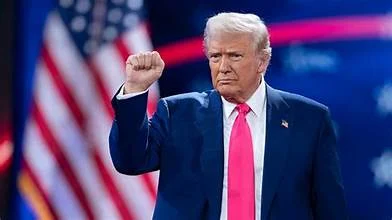
US President Donald Trump has announced plans to end Washington’s $3.8 billion annual military assistance to Israel, signalling a major shift in the longstanding security relationship between the two allies.
Trump said on Tuesday that Israel no longer needed the financial support provided under a 10-year security assistance agreement, which runs until 2028, adding that Israeli Prime Minister Benjamin Netanyahu had agreed to the proposed arrangement.
Speaking during an interview on Fox and Friends, a US current affairs programme, Trump described Israel as America’s closest ally but argued that continued military assistance was no longer necessary.
“Israel’s our number one; we give them more than anybody else, and they no longer need it,” Trump said, adding that Washington would still provide assistance if Israel faced a situation requiring American support.
“We’ll help Israel if they need it,” he added.
The assistance agreement, which began in 2019, was signed in 2016 under former US President Barack Obama. It provides Israel with approximately $3.8 billion annually, largely in military financing for the purchase of American weapons and defence equipment.
The proposed termination would mark a significant development in US-Israeli defence relations, considering Washington’s longstanding role as Israel’s principal military and security backer.
According to figures from the Council on Foreign Relations, Israel has received more than $300 billion in US economic and military assistance, adjusted for inflation, since its establishment in 1948. The amount makes it the largest cumulative recipient of American foreign assistance since 1946.
However, Netanyahu has repeatedly expressed his desire to reduce Israel’s dependence on American military support, arguing that the country should develop greater capacity to finance and sustain its own defence requirements.
In June, the Israeli prime minister called for increased military autonomy and a gradual reduction in reliance on Washington. He had earlier told The Economist in January that he hoped to achieve the objective within a decade.
Similarly, during an interview with US broadcaster CBS in May, Netanyahu said he wanted American military assistance to eventually reach zero.
Trump also linked his decision to growing political criticism of US support for Israel, particularly from sections of the American Democratic Party.
He specifically mentioned Abdul El-Sayed, a left-wing Democrat campaigning for a Senate seat in Tuesday’s midterm elections, who has attracted support amid growing public discontent over American backing for Israel.
“Why should we suffer the slings from lunatics like an El-Sayed when they don’t need it?” Trump said, referring to the criticism directed at Israel and the financial assistance it receives from Washington.
The announcement comes amid increasing debate within the United States over the scale of military assistance to Israel, particularly as opposition to American involvement in Israeli military operations continues to feature prominently in domestic political discussions.
However, Trump’s declaration raises questions about the future of the existing security agreement, the timeline for ending the assistance and whether Washington intends to replace direct military financing with another form of defence cooperation.
While Trump maintained that the United States would remain willing to assist Israel when necessary, ending the annual $3.8 billion package would represent a major change in the financial structure of the two countries’ security partnership.