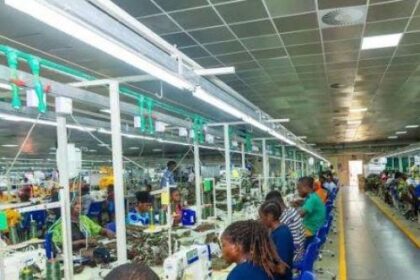
The African Guarantee Fund (AGF) has facilitated $7.4 billion in financing for small and medium-sized enterprises (SMEs) across 44 African countries, supporting about 55,800 businesses and 685,700 jobs.
As African economies seek to strengthen local production, expand employment and deepen private-sector participation, the African Guarantee Fund’s growing financing interventions offer another avenue for improving access to capital and supporting enterprise development across the continent.
According to its latest impact report as of September 30, 2026, financing facilitated by the institution increased by 16 per cent, while the number of beneficiary businesses rose by 12 per cent.
Jobs supported or created also increased by 16 per cent, alongside an estimated $5.9 billion in additional income generated by supported enterprises.
Established in 2011, the African Guarantee Fund provides credit guarantees to banks and other financial institutions to encourage lending to businesses that often struggle to access conventional financing because of inadequate collateral and perceived credit risks.
Rather than lending directly to businesses, the institution shares part of the risks associated with SME loans, enabling partner financial institutions to expand their credit facilities. Its network has grown to 256 financial institutions across the continent.
The Fund reported issuing $2.75 billion in guarantees, which helped unlock the $7.4 billion in financing. Its beneficiaries include 30,100 youth-owned or youth-led businesses, while 16,700 women-owned or women-led enterprises were recorded under its broader impact indicators.
Through its Affirmative Finance Action for Women in Africa (AFAWA) programme, AGF has also facilitated $1.18 billion in loans to women-owned businesses, with 16,600 enterprises benefiting from its interventions.
Beyond conventional business financing, the institution supports green investments through its Green Guarantee Facility.
It reported that its ongoing projects had connected 56.45 million people to green energy, supported 103.9 megawatts of renewable energy capacity and helped avoid an estimated 4.28 million tonnes of carbon dioxide equivalent emissions.
The figures highlight the growing importance of credit guarantee schemes in addressing financing gaps facing African businesses. However, the impact of such interventions will ultimately depend on whether the funding translates into affordable credit, increased production, business expansion and sustainable employment.
Despite improved access to financing, African SMEs continue to contend with high borrowing costs, unreliable electricity, inadequate infrastructure, currency volatility and limited capacity to maintain reliable financial records.