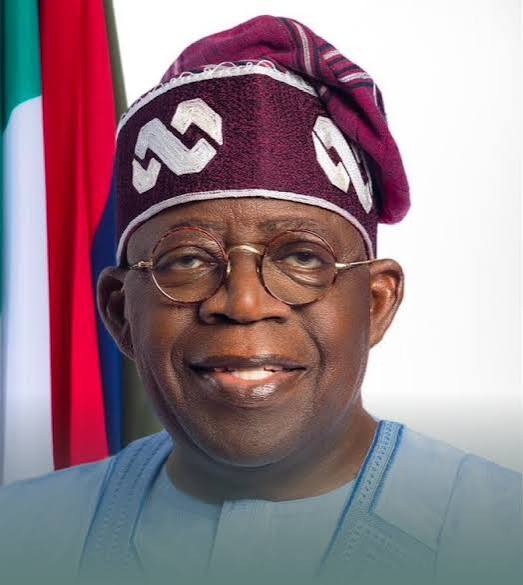
The latest controversy surrounding President Bola Tinubu and alleged historical drug-trafficking records in the United States has once again placed a troubling question before Nigerians: why should records capable of clarifying such a serious allegation remain shrouded in uncertainty?
The allegation itself is not new. What is new, and more troubling, is the continuing legal struggle over access to records held by United States law-enforcement agencies. Reports indicate that Tinubu’s legal team joined the US Department of Justice in seeking additional time to respond to a motion seeking the release of the records. The request was subsequently limited by the court.
In a post on its verified X handle on Saturday 29th August, the United States-based policy advisory and lobbying firm, Von Batten-Montague-York said President Tinubu had pleaded with the court not to order the Department of Justice, DOJ, Federal Bureau of Investigation, FBI, and Drug Enforcement Administration, DEA, to release the records.
It is important to stress that an allegation is not proof of guilt. President Tinubu is entitled to the presumption of innocence, and no responsible commentator should pronounce him guilty merely because records are being sought or because a political opponent’s lobbyists are publicising the case.
But the President of Nigeria is not an ordinary private citizen. The office he occupies carries an extraordinary responsibility to maintain public confidence. When questions concerning a president’s past become sufficiently serious to generate litigation in a United States federal court, Nigerians deserve clarity rather than an endless cycle of denials, counter-denials and procedural delays.
That is why the latest claims by Von Batten-Montague-York deserve careful scrutiny without necessarily being accepted as gospel. The firm is associated with former Vice-President Atiku Abubakar, President Tinubu’s political opponent, and its statements must therefore be considered in that political context. Its allegations are not themselves evidence that the President committed any crime.
Nevertheless, the existence of political motivation does not make the underlying question irrelevant. If there are records capable of conclusively disproving the allegations, the most politically damaging strategy would be to leave the public guessing about what those records contain.
President Tinubu and his lawyers have legitimate rights to participate in the court proceedings and to protect information that the law genuinely protects. The court itself has allowed the FBI to submit sensitive documents privately for judicial review, demonstrating that not every government record can simply be dumped into the public domain without consideration of legal and security concerns.
Yet privacy cannot become a permanent shield against legitimate public scrutiny when the issue concerns the character and eligibility of a sitting Nigerian president. If the records contain nothing capable of substantiating the allegations, their eventual disclosure could provide the President with something far more valuable than political argument: documentary vindication.
Indeed, if President Tinubu is truly confident of his innocence, there should be little political wisdom in appearing excessively anxious about transparency. A leader who knows that the facts are on his side should ordinarily welcome every lawful opportunity for those facts to emerge.
The President should therefore consider the larger political cost of prolonged secrecy. Every delay creates room for speculation. Every legal manoeuvre is interpreted by opponents as evidence of something being hidden. Every refusal to provide clarity keeps an old controversy alive. In politics, silence rarely kills a damaging allegation; sometimes it gives it a longer life.
At the same time, Nigerians must resist the temptation to convert suspicion into conviction. The opposition, activists and media organisations have a duty to distinguish between a court filing, an allegation, an investigation and an established finding of criminal conduct. Democracy suffers when political competition replaces evidence with insinuation.
The United States court process should therefore be allowed to run its course without political intimidation from either side. If the FBI, DEA and DOJ have legitimate legal grounds for withholding particular records, those grounds should be tested by the court. If the records can lawfully be released, then Nigerians should be allowed to see whatever the law permits to be disclosed.
For President Tinubu, however, the issue goes beyond what the courts may eventually decide. It is also about political confidence. A president who repeatedly tells Nigerians that allegations against him are false should have every incentive to demonstrate that confidence through maximum lawful transparency. If the records ultimately contain nothing incriminating, their release could decisively weaken one of the opposition’s most persistent lines of attack.
The presidency should therefore understand that the strongest defence against an allegation is not merely to attack its messenger. It is to confront the evidence. If President Tinubu is innocent, Nigerians should be given every lawful opportunity to see the evidence that supports that innocence. If some records must remain confidential for legitimate legal reasons, the reasons should be explained as fully as the law permits.
Nigeria has suffered enough from politics conducted in the shadows. The country needs institutions that can establish facts without fear, favour or partisan manipulation. President Tinubu has an opportunity to demonstrate that his administration believes in that principle.
Ultimately, the question is simple: if there is nothing damaging in the records, what better way is there for the President to silence the allegation than to allow the facts to speak for themselves? Confidence in one’s innocence should not fear transparency. If the truth is on President Tinubu’s side, Nigerians deserve to see that truth prevail.