The United States has urged G20 countries to take stronger measures to address growing trade imbalances and protect their domestic industries from an influx of Chinese goods.
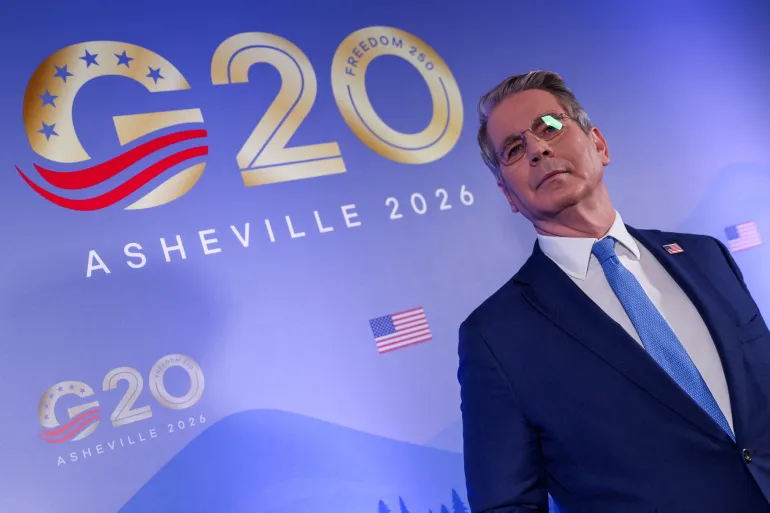
US Treasury Secretary Scott Bessent made the call as finance ministers and central bank governors from G20 countries gathered in Asheville, North Carolina, for a two-day meeting.
Bessent said countries that face large trade deficits should consider adopting measures similar to those used by the Trump administration, including tariffs and other forms of trade protection.
He argued that China’s export-driven economic model was diverting growth from other economies and putting pressure on domestic industries and jobs.
According to Bessent, Washington had warned its trading partners that higher US tariffs on Chinese products could lead to Chinese goods being redirected to other markets.
He said that warning had materialised, urging other countries to take a closer look at how they could protect their citizens and domestic employment.
The US position comes as China continues to expand its exports, particularly in strategic sectors such as electric vehicles, semiconductors and other manufactured goods.
China’s exports reportedly increased significantly in July, reflecting Beijing’s continued reliance on overseas markets amid relatively weak domestic demand.
The growing flow of Chinese goods has raised concerns in Europe and other major economies, with some governments considering tougher measures to shield local producers from intense competition.
However, Washington’s tariff strategy has itself attracted criticism from economists and political leaders who argue that tariffs can increase costs for consumers and disrupt international trade.
The Tax Foundation has estimated that tariffs imposed by the Trump administration during 2025 contributed to a substantial increase in the retail prices of imported consumer goods.
European Economy Commissioner Valdis Dombrovskis agreed that China was a major source of global economic imbalances but stressed that the United States and Europe also had responsibilities in addressing the problem.
German Finance Minister Lars Klingbeil went further, warning that US tariff disputes and geopolitical tensions were contributing to uncertainty and weakening global economic confidence.
His comments reflect growing concern that competing tariff measures could undermine investment, trade and economic growth at a time when countries are already facing debt and inflation pressures.
The G20 meeting therefore faces a difficult task in finding common ground among economies with very different interests and approaches to international trade.
China has shown limited enthusiasm for longstanding demands that it reduce industrial subsidies and rebalance its economy towards stronger domestic consumption.
Beijing’s control over critical mineral processing has also become a major source of tension, particularly following restrictions on rare-earth exports and the continuing trade dispute with Washington.
However, the G20 must avoid allowing legitimate concerns about trade imbalances to develop into another damaging tariff war. China should address concerns over subsidies, market access and excess industrial capacity, but other major economies must also examine their own policies. The priority should be a fair, rules-based trading system that protects jobs and industries without imposing unnecessary costs on consumers or further fragmenting the global economy.