Brazil’s oil industry is experiencing a major surge as the war in Iran disrupts Middle Eastern supplies and pushes China to seek alternative sources of crude.
The crisis has exposed the vulnerability of global energy trade through the Strait of Hormuz, one of the world’s most important oil chokepoints. With oil harder to access and Russian supply largely constrained by sanctions, Asian buyers are scrambling for crude from suppliers seen as safer and more reliable.
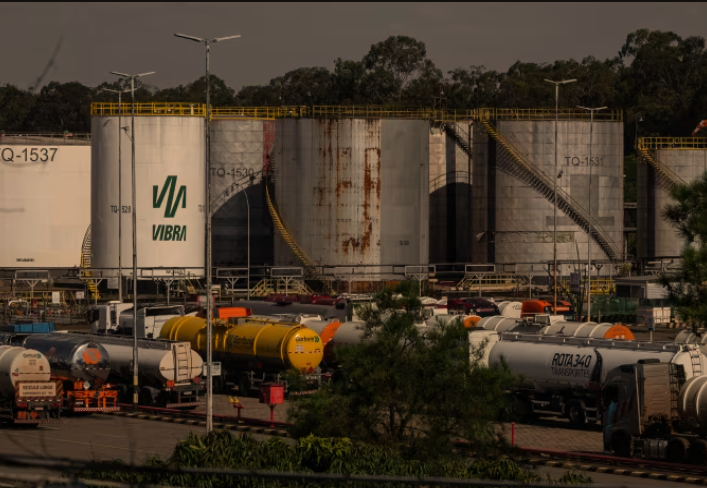
Brazilian oil production rose to a record 4.5 million barrels per day in June, up 19 per cent from a year earlier, driven largely by stronger Chinese demand.
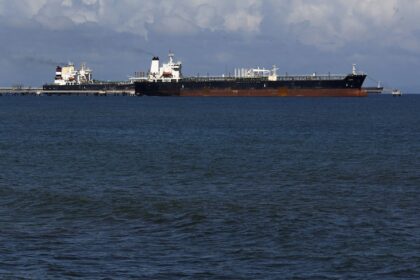
The disruption of oil flows through the Strait of Hormuz, a crucial route that previously carried about 20 per cent of global oil supplies, has forced major importers to diversify their sources. China’s crude imports fell by about 40 per cent between February and May, prompting the country to turn increasingly to Brazil.
Brazil, which is already one of the world’s biggest oil exporters, has emerged as one of the clearest beneficiaries.
According to Al Jazeera, a specialist in modelling refinery and oil markets at Kpler, Sumit Ritolia said “the disruption caused by the Iran war and the closure of the Strait of Hormuz has increased the importance of Brazil as a marginal crude supplier to Asia.”
“China and India in particular have increased purchases of Brazilian crude to secure barrels that are not exposed to Gulf shipping disruptions,” he added.
Analysts say Brazil cannot replace the Middle East as Asia’s main oil supplier. However, as shipping risks rise in the Gulf amid Iran’s effective closure of the Strait of Hormuz and the corresponding naval blockade on Iranian ports by the United States, its oil has become increasingly attractive to refiners seeking to avoid supply shocks.
Asian countries imported about 1.2 million barrels per day (bpd) of crude from Brazil in 2025, according to data supplied to Al Jazeera by trade intelligence firm Kpler. That rose to roughly 1.8 million bpd between January and May this year, highlighting Brazil’s growing role in Asia’s efforts to diversify away from the Gulf.
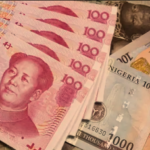
The shift has significantly boosted Brazil’s oil exports. The value of Brazilian oil exports to China more than doubled in the first half of the year to a record $15.1 billion, according to the Brazil-China Business Council.
Brazilian Mines and Energy Minister Alexandre Silveira said the disruption of major international shipping routes had increased the strategic importance of expanding the country’s oil production.
The surge in global crude prices has also made Brazil’s vast offshore reserves more commercially attractive. Much of the country’s oil is located in deep pre-salt formations, which are technically challenging and expensive to develop. Advances in technology, combined with higher oil prices, have improved the economics of extracting the reserves.
Also, Energy intelligence firm Enverus estimates that Brazil’s pre-salt oil production could reach as much as 4 million barrels per day by 2030, giving the country greater capacity to supply international markets.
Brazil is also seeking to expand its offshore production through new discoveries. State-controlled oil giant Petrobras recently announced an oil discovery in the Equatorial Margin off the coast of Amapá, near the mouth of the Amazon River.
The developments are strengthening Brazil’s position as an alternative supplier at a time of heightened geopolitical uncertainty.
Petrobras said its production and exports are not dependent on any single geopolitical event and highlighted the availability of alternative shipping routes from the conflict-affected region.
However, Brazil’s rise should not be mistaken for a substitute for the Strait of Hormuz. The strait is a concentrated artery linking the world’s largest producing region with its biggest consuming markets. Brazil’s oil fields are distant from Asia, and its exports depend on long maritime routes, tanker availability, port capacity and stable access to international shipping lanes. A disruption in the Gulf cannot simply be replaced by additional Brazilian barrels overnight.
There are also limits to Brazil’s production growth. Deepwater projects require years of investment, complex infrastructure and high prices to remain profitable. Environmental opposition, regulatory uncertainty and the risks associated with drilling near the Amazon’s coastal ecosystem could slow new developments. Brazil must also balance the economic benefits of expanded oil production against its climate commitments and the global transition towards cleaner energy.
The quality of Brazilian crude presents another constraint. Much of the country’s output is medium or heavy oil, while refineries are configured differently across Asia. Brazil can help diversify supply, but it cannot perfectly replace every grade of crude lost from the Gulf.
The more realistic conclusion is that Brazil can provide resilience, not equivalence. Its growing output can reduce the exposure of China, India and other Asian buyers to a single strategic chokepoint. It can also strengthen Brazil’s bargaining power, attract investment and deepen its commercial relationship with China. But it cannot match the scale, proximity or centrality of the Middle East in global oil markets.
That distinction matters. Brazil’s opportunity is not to become a new Strait of Hormuz, but to become one of the pillars of a more diversified energy system. The country can use its offshore reserves to gain influence while investing the proceeds in infrastructure, technology and a credible transition beyond fossil fuels.
With Middle Eastern oil supplies facing disruption, Brazil’s growing production could give the South American country a larger role in global energy markets while deepening its already significant trade relationship with China. But the crisis should also serve as a warning: no single alternative can eliminate the risks created by dependence on vulnerable routes. The durable solution is diversification across suppliers, transport corridors and energy sources—not the replacement of one chokepoint with another.