The Federal Government has stepped up efforts to establish Lagos as a globally competitive financial hub with the inauguration of a National Steering Committee for the Lagos International Financial Centre (LIFC).
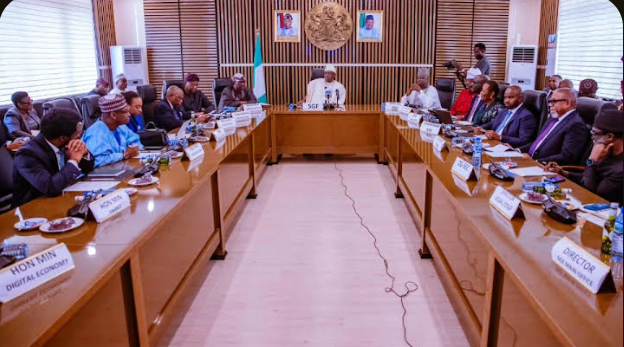
The committee was inaugurated in Abuja on Wednesday, September 2, 2026, by the Secretary to the Government of the Federation, Senator George Akume, who described the initiative as a strategic opportunity to deepen Nigeria’s financial markets and attract international investment.
The National Steering Committee is composed as follows: Chairman, Secretary to the Government of the Federation, Sen. George Akume CON; Co-Chairman: Governor, Lagos State Babajide Sanwo – Olu.
Shadow Chair: Permanent Secretary (GSO) OSGF, Dr. Ibrahim Abubakar Kana, mni, DRM, Shadow Co-Chair: Hon. Commissioner for Finance, Lagos State Government, Mr. Abayomi Oluyomi.
Others are: Honourable Minister of Finance and Coordinating Minister of the Economy – Taiwo Oyedele; Honourable Attorney General of the Federation and Minister of Justice – Lateef Fagbemi, SAN; Honourable Minister of Foreign Affairs, Amb. Bianca Odumiegwu-Ojukwu; Honourable Minister of Interior of Nigeria is Dr. Olubunmi Tunji-Ojo;Honourable Minister of Industry, Trade and Investment Dr. Jumoke Oduwole, MFR; Honourable Minister of Communications, Innovation & Digital Economy, Dr. ‘Bosun Tijani; Governor of the Central Bank of Nigeria (CBN), Mr. Olayemi Cardoso; Director-General of the Securities and Exchange Commission (SEC), Dr. Emomotimi Agama; Executive Chairman of the Nigeria Revenue Service (NRS) Dr. Zacch Adedeji andEnterpriseNGR Chairman Aigboje Aig- Imoukhuede.
Members of the Secretariat are: Director of Legal Services (OSGF) Mrs. Kamilatu M. Kida and CEO, EnterpriseNGR, Ms. Obi Obiekwe.
At the inaugural ceremony, Akume said President Bola Ahmed Tinubu had endorsed the LIFC as a national economic priority and directed the Office of the Secretary to the Government of the Federation to coordinate Federal Government support for its implementation.
He said the centre would leverage Lagos’ position as Nigeria’s commercial and financial capital to promote investment, encourage financial innovation and strengthen the country’s financial ecosystem.
According to him, the initiative would require close cooperation among Federal institutions, the Lagos State Government, regulators and private-sector stakeholders to address the legal, regulatory, institutional and infrastructure requirements needed for its success.
The National Steering Committee is chaired by Akume, while Lagos State Governor Babajide Sanwo-Olu serves as co-chairman. Other senior officials on the committee include the Minister of Finance and Coordinating Minister of the Economy, Taiwo Oyedele; Attorney-General of the Federation, Lateef Fagbemi; and Governor of the Central Bank of Nigeria, Olayemi Cardoso.
Also represented are the Ministries of Foreign Affairs; Interior; Industry, Trade and Investment; and Communications, Innovation and Digital Economy, alongside the Securities and Exchange Commission and the Nigeria Revenue Service.
The private sector is represented by EnterpriseNGR, with its Chairman, Aigboje Aig-Imoukhuede, playing a key role in the development of the initiative.
Speaking at the inaugural meeting, Sanwo-Olu described the LIFC as “strategic national infrastructure,” arguing that its significance extends beyond Lagos and should be viewed as part of Nigeria’s long-term economic strategy.
The governor said international financial centres were deliberately created to attract long-term capital, deepen domestic markets and connect local economies with global investment networks.
He said Lagos had the necessary ecosystem to anchor such a centre, given its concentration of banks, insurance companies, capital market operators, fintech firms, asset managers and professional service providers.
Sanwo-Olu said the ultimate objective was to establish Lagos as Africa’s premier international financial centre and a trusted gateway through which global investors could access opportunities across Nigeria and the continent.
He, however, stressed that attracting capital would depend on creating an environment built on institutional trust, regulatory quality, legal certainty, transparency and international connectivity.
The governor said the proposed centre would not operate as a tax haven or facilitate regulatory arbitrage but would instead be developed as a transparent and properly regulated jurisdiction capable of meeting international standards.
Aig-Imoukhuede, Chairman of EnterpriseNGR and Co-Chairman of the LIFC Council, said the partnership between the Federal Government, Lagos State and the private sector demonstrated the possibilities of institutional cooperation in Nigeria.
He said global capital was highly mobile and would naturally gravitate towards jurisdictions where investors felt secure, understood the rules and saw credible opportunities for growth.
EnterpriseNGR has been involved in the development of the LIFC from its early stages, bringing together stakeholders from banking, insurance, capital markets, asset management and professional services to contribute to its design.
Preparatory activities have included the development of a strategic blueprint, legal and regulatory assessments, a business plan and an institutional operating framework, while specialist teams are working on reforms and the international positioning of the centre.
KPMG is supporting the LIFC Project Office, while TheCityUK is providing international technical assistance with support from the UK Government.
The initiative is also being linked to Nigeria’s ambition of building a $1 trillion economy by 2030, with stakeholders arguing that such an economy would require deeper capital markets, larger pools of investment and stronger connections to global finance.
The LIFC is expected to help channel international capital into productive sectors across Nigeria, including infrastructure, technology, agriculture and manufacturing, while creating opportunities for high-value employment and strengthening professional services.
Attorney-General of the Federation, Lateef Fagbemi, pledged Federal Government support for legal reforms that would provide investors with greater certainty, while Nigeria Revenue Service Chairman, Zacch Adedeji, called for a rapid shift from planning to implementation.
Minister of Industry, Trade and Investment, Jumoke Oduwole, described the centre as a potential catalyst for Nigeria’s economic transformation, while the Ministry of Foreign Affairs pledged to support the project through investment diplomacy and international partnerships.
Meanwhile, With the Federal Government now providing national-level backing, Lagos State driving the project as host jurisdiction and EnterpriseNGR providing private-sector participation, the LIFC has entered a crucial implementation phase, with promoters targeting a soft launch in the first quarter of 2027.
P.M.