BRICS finance ministers and central bank governors have renewed calls for greater representation of emerging-market and developing economies in the International Monetary Fund and World Bank, while condemning unilateral tariffs and trade measures that they argue distort global commerce.
In a joint statement issued late Thursday, the finance chiefs said the growing contribution of emerging and developing economies to global output and economic growth made reform of the international financial system increasingly necessary.
They pledged to strengthen coordination among BRICS members to make international financial institutions more representative, transparent and accountable.
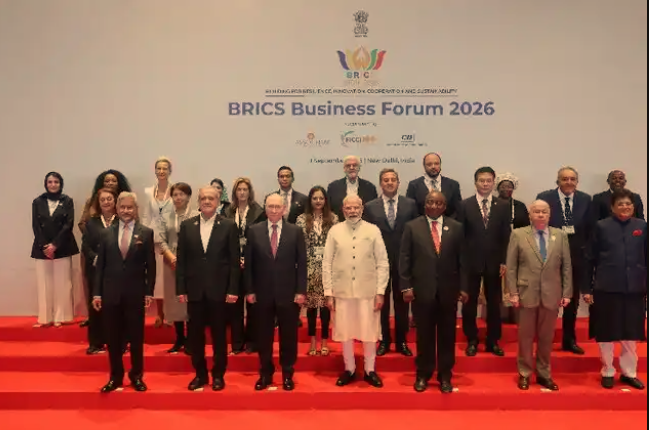
The declaration comes as India prepares to host the BRICS Leaders’ Summit in New Delhi this weekend, with the leaders of Russia, China and Iran among those expected to attend.
But while the argument for reform is difficult to dismiss, a more fundamental question remains: Is BRICS itself ready to provide the unity, transparency and financial commitment required to build a credible alternative or influence the existing system?
The bloc has grown considerably since its original formation, bringing together economies with very different political systems, economic interests and strategic priorities. Its expansion has increased its geopolitical weight, but greater size does not automatically translate into greater institutional coherence.
BRICS’ criticism of the IMF and World Bank also exposes an uncomfortable contradiction. The bloc is demanding more representation, accountability and fairness from institutions it says no longer adequately reflect the global economy, yet its own members must demonstrate that they can cooperate consistently when their national interests diverge.
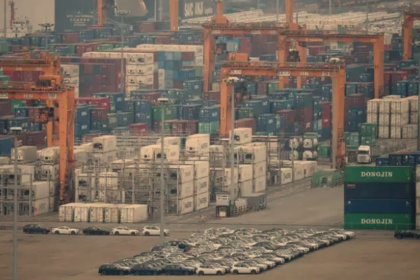
The finance chiefs also criticised what they described as the unilateral imposition of trade and finance-related measures, including higher tariffs and non-tariff barriers, arguing that such policies distort trade and conflict with World Trade Organisation rules.
The criticism comes amid continuing volatility in global trade and renewed pressure on emerging economies. The geopolitical conflict involving Iran has also pushed up oil prices, adding to the economic burden confronting energy-importing developing countries.
For BRICS, however, opposing unilateral tariffs is easier than building a trading and financial architecture capable of reducing members’ vulnerability to them.
One of the most important areas highlighted in the statement is cross-border payments. BRICS finance officials encouraged their Payment Task Force to pursue practical solutions that would make payments between member countries faster, cheaper, safer and more accessible.
India is also expected to push discussions on linking digital currencies across BRICS countries, according to sources familiar with the negotiations.
That ambition could eventually reduce dependence on traditional international payment channels, but implementation will require much more than political declarations. It will demand compatible financial infrastructure, regulatory cooperation, cybersecurity safeguards, trust among central banks and a willingness by members to make difficult compromises.
This is where the credibility question becomes unavoidable.
Can BRICS move beyond summit declarations and establish institutions that businesses, investors and ordinary citizens can actually depend on? Can its members accept common rules when those rules conflict with individual national priorities? And, perhaps most importantly, are they prepared to put sufficient money and political capital behind the institutions they are demanding?
The IMF and World Bank, for all their shortcomings, possess decades of institutional experience, established funding mechanisms and global networks. BRICS therefore faces a considerably harder task than simply criticising the existing architecture.
There is also the question of whether the IMF itself is capable of reforming quickly enough. The changing distribution of global economic power makes a stronger voice for emerging economies increasingly difficult to resist, but institutional reform has historically been slow and politically complicated.
A more representative IMF and World Bank would require major shareholders to accept changes to voting power and influence. That is not simply an economic question; it is a redistribution of geopolitical power.
BRICS is therefore right to argue that the world’s financial institutions should better reflect today’s economic realities. But being right about the problem does not automatically make the bloc capable of solving it.
The real test for BRICS will be whether its members can demonstrate the same transparency, accountability and institutional discipline they demand from the IMF and World Bank.
If the bloc genuinely wants a larger voice in global financial governance, it must show that it can speak with credibility, finance its ambitions and honour common commitments even when doing so is inconvenient.
Otherwise, the calls for reform risk becoming another familiar feature of international summits: strong rhetoric, ambitious communiqués and limited delivery.
As BRICS leaders gather in New Delhi this weekend, the world will therefore be watching not only what the bloc demands from the IMF and World Bank, but what it is prepared to do itself to prove that a different global financial order can actually work.