The Minister of Power, Joseph Tegbe, may have intended to celebrate what he described as an improvement in electricity supply, but his claim that some Nigerians asked him to “slow down” because their freezers were now freezing continuously has exposed a deeper question about Nigeria’s power crisis: what exactly should Nigerians consider an achievement? If uninterrupted electricity has become so unusual that a working freezer is presented as evidence of extraordinary progress, then the statement says as much about the country’s history of power failure as it does about the minister’s claimed improvement.
There is no doubt that Nigerians deserve to acknowledge every genuine improvement in electricity supply. But the reported 18-hour supply should not be interpreted as the experience of the average Nigerian across the country. Electricity availability varies considerably from one location to another. While some areas may reportedly enjoy as much as 18 hours of supply, others may receive only a few hours, while some households experience four, three, two or even one hour of electricity. In some places, supply can be reduced to periods lasting only a few minutes. That uneven reality makes a national celebration of “18 hours” difficult to reconcile with the everyday experience of many electricity consumers.
For millions of Nigerians, electricity is not a luxury. It is a basic requirement for modern life and economic productivity. A trader needs it to preserve goods. A barber needs it to operate equipment. A student needs it to study. A manufacturer needs it to run machinery. A hospital needs it to keep essential equipment functioning. A university needs it to power laboratories and digital infrastructure.
Therefore, when a minister celebrates freezers freezing, the appropriate response is not necessarily celebration; it is to ask why reliable electricity remains remarkable in a country that has spent decades investing in the power sector.
The government’s explanation that some electricity infrastructure is more than 40 years old is important, but it is also a reminder of decades of inadequate maintenance, investment and planning.
Nigerians have heard successive administrations promise to transform the power sector. They have witnessed generation projects, transmission projects, distribution interventions, privatisation and billions of naira committed to electricity. Yet many households and businesses continue to depend on generators and alternative power sources. The persistence of this reality means the government must be judged not only by temporary improvements but by whether those improvements are reliable, affordable and sustainable.
More importantly, 18 hours of electricity should not become the benchmark for success in a country of more than 200 million people. If some Nigerians are receiving 18 hours while others are struggling with a few hours or minutes, the national conversation should be about closing that gap. The question is not simply how much electricity is being supplied somewhere; it is how consistently and equitably electricity is reaching Nigerians across different communities.
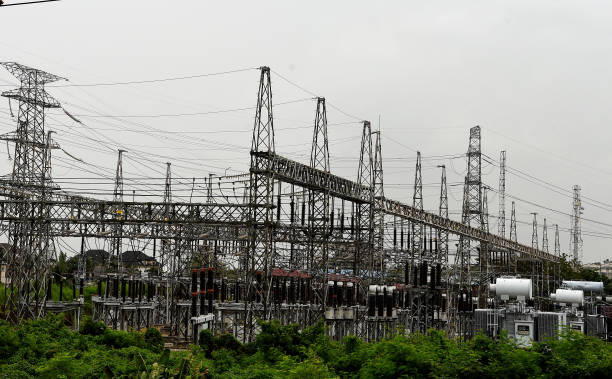
The minister’s disclosure that vandals brought down three transmission towers in Birnin Kebbi further demonstrates the complexity of the crisis. Infrastructure vandalism is a serious threat to electricity supply and should be confronted decisively. But protecting existing infrastructure must go alongside expanding and modernising it. Nigerians should not have to choose between celebrating new infrastructure and worrying about whether existing infrastructure will survive.
The central issue, therefore, is not whether some Nigerians are enjoying better electricity supply today. Some clearly may be. The more important question is whether the improvement represents a durable transformation that Nigerians can depend on tomorrow. Satisfaction should not be measured by whether a freezer is finally freezing; it should be measured by whether citizens can plan their lives and businesses without constantly planning around power outages.
There is also a danger in allowing Nigerians’ low expectations to become the benchmark for government performance. A citizen who has endured prolonged darkness may understandably celebrate few hours, not even 18 hours of electricity.
But government should aspire to make dependable electricity normal rather than extraordinary. The objective should be a power system that businesses can trust, universities can depend on and households can budget around without maintaining generators as an alternative source of survival.
The solar project at Yakubu Gowon University illustrates what can be achieved when public investment is directed towards critical infrastructure. With thousands of solar panels, battery storage and streetlights, the project has the potential to improve academic activities and create an environment more conducive to learning and research. But its long-term value will ultimately depend on maintenance, expansion, transparency and continued functionality—not simply the ceremony at which it was commissioned.
The government may therefore regard the recent improvement as a significant achievement, and it is entitled to point to measurable gains. But Nigerians are equally entitled to ask whether those gains have translated into a dependable national electricity system. Are Nigerians satisfied, or have they simply become accustomed to expecting so little that few hours of power feels like a miracle? That distinction matters.
The minister’s freezer anecdote should consequently be treated less as a punchline and more as a reminder of the standard Nigerians deserve. A freezer freezing is not the destination; it is the most basic consequence of having electricity. The real achievement will come when Nigerians no longer need to celebrate the ordinary, when businesses can operate without fear of sudden outages, when universities can conduct uninterrupted research and when reliable electricity becomes an everyday expectation rather than a government announcement.
To the government, it looks like significant achievement but to Nigerians, it’s a significant failure.
Are Nigerians satisfied or contented?
Nigeria does not merely need more hours of electricity. It needs dependable power, modern infrastructure, sustainable investment and a system that works consistently across the country. Until that happens, 18 hours for some cannot erase the reality of a few hours—or even minutes—for others.