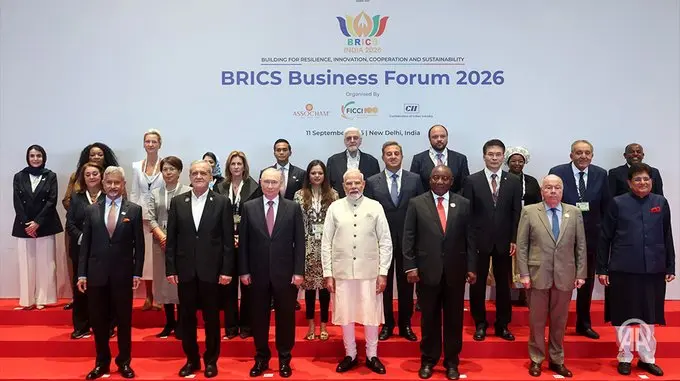
NEW DELHI, The BRICS bloc has unanimously adopted the 2026 New Delhi Declaration, calling for stronger global cooperation on trade, energy security, financial systems and conflict resolution, while condemning terrorism and unilateral economic sanctions.
The 45-page declaration, containing 140 points, was adopted on Saturday at the 18th BRICS Summit in New Delhi after intensive negotiations that reportedly continued until the early hours of the day. India, which holds the bloc’s 2026 presidency, played a key role in bridging differences among members, particularly over the conflict in the Middle East.
Announcing the adoption, Indian Prime Minister Narendra Modi said, “No member has raised any objection. The New Delhi Declaration 2026 is adopted unanimously.”
The agreement comes at a challenging time for BRICS, with geopolitical tensions, disruptions to energy and shipping routes, and growing trade restrictions testing unity among its expanded membership. Nevertheless, the declaration reflects the bloc’s determination to strengthen the voice of emerging economies in global affairs.
Terrorism and Conflict Resolution
BRICS strongly condemned terrorism in all its forms, including cross-border terrorism, terrorism financing and the provision of safe havens to terrorists.
The bloc also condemned the April 22, 2025, terrorist attack in Jammu and Kashmir, calling for accountability, zero tolerance for terrorism and the early adoption of the United Nations Comprehensive Convention on International Terrorism.
It reaffirmed that terrorism must not be associated with any religion, nationality, civilisation or ethnic group.
On the Middle East, the member states expressed deep concern over the continued escalation of tensions and called for maximum restraint. They opposed attacks on civilian infrastructure and nuclear facilities, warning of the wider consequences for regional and global security.
The declaration reaffirmed BRICS’ opposition to the forced displacement of Palestinians and any attempt to alter the geography or demography of occupied Palestinian territory. It called for an end to violence in Gaza, unhindered humanitarian assistance, support for the United Nations Relief and Works Agency and full United Nations membership for Palestine.
The bloc also reiterated its support for a two-state solution, including an independent Palestinian state based on the internationally recognised 1967 borders.
Trade, Tariffs and Financial Cooperation
BRICS expressed concern over unilateral tariff and non-tariff measures, warning that such policies could distort global trade, disrupt supply chains and undermine economic stability.
The bloc reaffirmed its support for a World Trade Organization-centred multilateral trading system and called for the restoration of a fully functioning, two-tier and binding WTO dispute-settlement mechanism.
It also opposed unilateral economic and secondary sanctions that it considered inconsistent with international law and the principles of the United Nations Charter.
The declaration supported Ethiopia and Iran’s bids for WTO membership and noted China’s decision to extend zero-tariff treatment to 53 African countries with which it maintains diplomatic relations.
On financial cooperation, BRICS backed efforts to promote cross-border payments and trade settlements in members’ local currencies, subject to national priorities. It also acknowledged ongoing discussions on making payment and financial messaging systems interoperable.
These measures reflect the bloc’s broader ambition to reduce dependence on traditional Western-dominated financial channels and strengthen economic resilience among emerging markets.
Energy Security and Global Governance
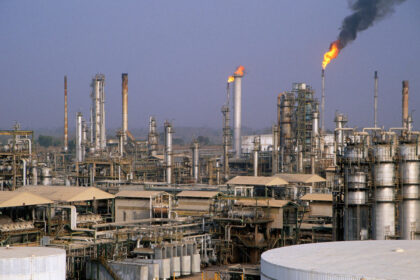
The declaration called for diversified energy sources, resilient infrastructure and stable energy markets, recognising that fossil fuels would continue to play an important role in the energy mix, particularly in emerging markets and developing economies.
At the same time, BRICS supported fair, orderly and inclusive energy transitions involving renewable energy, nuclear power, hydropower, hydrogen, fossil fuels and other low-carbon technologies.
On global governance, the bloc renewed its call for reform of the United Nations, including the Security Council, to make international decision-making more representative and democratic.
China and Russia reiterated their support for Brazil and India to assume greater roles in the United Nations system, including the Security Council. Modi also proposed 10 measures that could form the basis of a BRICS reform roadmap aimed at strengthening the representation of the Global South.
Women’s Empowerment and Security Cooperation
BRICS recognised women as leaders, decision-makers and key contributors to economic growth and social transformation. It called for greater female participation in governance, economic activities, peacebuilding and climate action, alongside improved access to finance, digital technology, skills and entrepreneurship opportunities.
The bloc further expressed concern over illicit financial flows associated with drug trafficking, firearms trafficking, terrorism financing and organised crime. It called for stronger international cooperation to trace criminal proceeds and disrupt transnational criminal networks.
It also encouraged cooperation in sports technology to improve athletic performance, athlete welfare, governance and inclusion, while supporting discussions on a BRICS Sports Goods Manufacturing Conclave and a possible working group on sports technology.
Unity Amid Internal Divisions
The declaration’s unanimous adoption represents an important diplomatic achievement for India’s BRICS presidency. However, the consensus does not erase the differences among members, particularly over the Middle East conflict, trade policies and the future direction of the global financial system.
Iran and the United Arab Emirates, both BRICS members, have found themselves on opposing sides of the wider regional conflict, while the United States’ tariffs and criticism of the bloc have added pressure to its economic agenda.
The real test for BRICS, therefore, will be whether its declarations can be translated into coordinated action. As the group seeks to strengthen the Global South’s influence, its credibility will depend not only on its ability to reach consensus but also on its capacity to deliver practical reforms in trade, finance, energy and global governance.