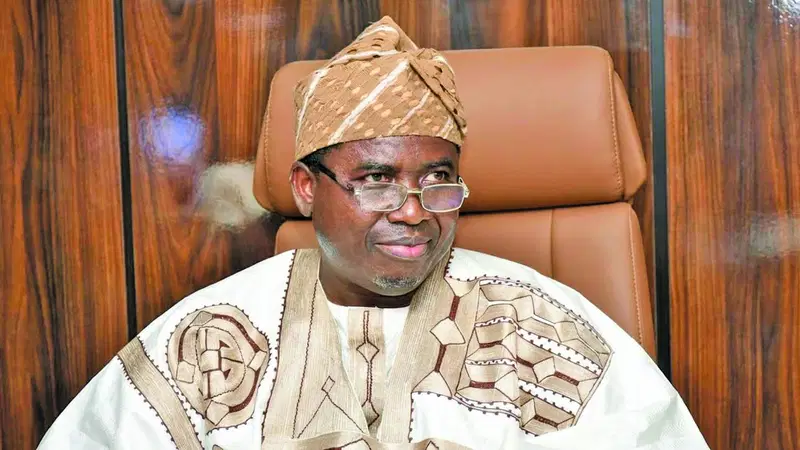
The explanation offered by the Chairman of the Independent National Electoral Commission (INEC), Professor Joash Amupitan, for the declining proportion of young Nigerians on the country’s voters’ register ahead of the 2027 general election is, at best, incomplete.
While his argument that some Nigerians classified as youths in 2023 have since moved into older age categories is mathematically understandable, it does not adequately address the more fundamental question of why young Nigerians are increasingly losing interest in the country’s electoral process.
Rather than offering an explanation that appears to dismiss growing concerns about youth participation, INEC should confront the institutional failures and credibility problems that have progressively weakened public confidence in elections.
Speaking at the grand finale of the INEC Campus Debate at the University of Abuja, Amupitan disclosed that young people now account for 29.79 per cent of the voters’ register being prepared for the 2027 elections, compared with 39.65 per cent in 2023, attributing the reduction to the progressive migration of individuals who were between 18 and 34 years old in 2023 into older age categories.
Indeed, nobody disputes that age is not a permanent classification and that individuals naturally graduate from one demographic bracket into another. However, the chairman must equally recognise that adolescence and youth are transitional stages of life, and the movement of one generation into an older category should ordinarily be accompanied by the entry of another generation into the voting population.
Therefore, the ageing of previously registered young voters, on its own, cannot sufficiently explain the declining proportion of youths in the register.
More importantly, there is a difference between the demographic composition of a voters’ register and the willingness of eligible citizens to register and participate in elections. The 29.79 per cent figure is not, by itself, proof that fewer young Nigerians intend to vote nevertheless, it raises legitimate questions about the extent to which INEC is attracting new eligible voters, sustaining their interest and creating an electoral environment in which they believe their votes genuinely matter.
Therefore the commission cannot isolate demographic changes from the broader political and institutional circumstances influencing citizens’ decisions to participate. If young people increasingly perceive elections as exercises whose outcomes may not necessarily reflect their choices, the consequence will inevitably extend beyond registration figures to actual voter turnout.
According to figures presented by INEC itself, presidential election turnout fell from approximately 53.7 per cent in 2011 to 43.6 per cent in 2015, 34.7 per cent in 2019 and just 26.7 per cent in 2023. This means that barely one in four registered voters participated in the last presidential election.
Although voter apathy has several causes, including insecurity, economic difficulties, migration, logistical challenges and dissatisfaction with political leadership, the consistent decline should compel the electoral commission to examine its own contribution to the crisis rather than concentrate on explanations that place the responsibility elsewhere.
The 2019 general election offers an important lesson. The European Union Election Observation Mission identified serious operational and transparency shortcomings, electoral security problems and low voter turnout.
Its final report criticised the last-minute postponement of the presidential election, weaknesses in results collation, inadequate public information and increasing incidents of violence and intimidation.
The mission warned that these systemic failures demonstrated the need for fundamental electoral reforms. Such experiences do not simply disappear after an election, they influence how citizens approach subsequent elections, particularly when those responsible for administering the process fail to demonstrate that the identified weaknesses have been decisively addressed.
The 2023 general election further complicated the relationship between INEC and the electorate as expectations were considerably high following the enactment of the Electoral Act 2022 and the introduction of the Bimodal Voter Accreditation System (BVAS) and the INEC Results Viewing Portal (IReV).
These innovations generated considerable enthusiasm, particularly among young Nigerians who believed technology would strengthen transparency, prevent manipulation and make their votes more meaningful but unfortunately, the commission’s failure to upload presidential election results promptly to IReV, despite earlier assurances about electronic transmission, created widespread controversy and undermined confidence in the process.
The European Union Election Observation Mission’s final report on the 2023 elections was particularly instructive. It concluded that the lack of transparency in implementing election technology and the failure to promptly upload presidential election results contributed to reduced public trust in the credibility of the elections.
The mission also documented logistical shortcomings, inadequate communication and procedural problems that affected the electoral process.
Similarly, the joint observation mission of the National Democratic Institute and International Republican Institute concluded that the elections fell short of Nigerians’ legitimate expectations, citing significant logistical, technological and communication failures, political violence and instances of vote manipulation. These were not merely complaints from defeated political parties or disgruntled candidates. They were findings from international election observers who monitored the process.
For young Nigerians who had invested considerable energy in voter registration, political mobilisation, online campaigns and electoral advocacy, the experience was particularly disappointing because many had embraced the 2023 election as an opportunity to challenge the traditional political establishment and influence the direction of national leadership but the failure of the electoral process to meet the transparency expectations created by INEC’s own technological promises inevitably raised questions about the value of their participation.
It is therefore intellectually dishonest to discuss declining youth involvement without acknowledging the consequences of the commission’s previous failures. Young people cannot be expected to maintain unlimited enthusiasm for a process whose credibility they increasingly question.
There is also the troubling issue of electoral violence, intimidation, vote buying and other irregularities that have characterised successive elections. The 2019 EU observation report documented widespread intimidation, including incidents involving electoral officials and voters. The 2023 NDI/IRI report similarly identified political violence and instances of vote manipulation.
These developments reinforce the perception that electoral participation in Nigeria is sometimes determined by factors beyond the choices of ordinary voters. When citizens fear violence at polling units, witness the intimidation of political opponents or believe that financial inducements can undermine the integrity of their votes, the democratic incentive to participate becomes considerably weaker.
Equally important is the relationship between INEC’s independence and public confidence. Over the years, opposition parties have repeatedly accused the commission of favouring the ruling establishment, particularly during controversial elections and results collation. While such allegations must not automatically be treated as established facts, their recurrence and the controversies surrounding electoral administration make them impossible to dismiss.
An electoral commission operating in a politically charged environment must do considerably more than proclaim its independence. It must demonstrate impartiality through transparent procedures, consistent communication, accountability and decisions that can withstand public scrutiny. The confidence of the electorate cannot be secured through official assurances alone.
It is against this background that Professor Amupitan’s reference to the successful conduct of elections under his leadership deserves closer examination. The chairman said that within his first year and ten days in office, the commission had conducted four off-cycle elections, including the Anambra governorship election, Federal Capital Territory area council elections, Ekiti governorship election and Osun governorship election.
He further suggested that elections in Anambra and Osun, which had previously been inconclusive, were now successfully concluded under his watch, forgetting that while the successful completion of elections is commendable, the commission must understand that conclusiveness is not synonymous with credibility.
An election can produce a final result and still attract legitimate questions about transparency, fairness and the integrity of the process.
Indeed, the chairman’s emphasis on the improvement recorded under his leadership raises another important question: if electoral administration can be improved sufficiently to produce conclusive elections, what prevented previous administrations from delivering the same standard? Does this not reinforce the concerns that the commission’s performance is influenced by leadership decisions, institutional priorities and the political environment in which it operates? Opposition parties have historically alleged political interference in the electoral process, and INEC must recognise that its credibility will remain vulnerable until it demonstrates that its decisions are entirely insulated from partisan considerations.
Amupitan should therefore avoid presenting the successful conduct of elections under his leadership as sufficient evidence of institutional improvement. Nigerians deserve assurances backed by verifiable transparency, not comparisons that leave unresolved questions about previous electoral failures.
The commission must also appreciate that young people’s dissatisfaction with elections cannot be separated from the wider economic and political realities confronting them. Unemployment, poverty, insecurity, rising living costs and limited opportunities have intensified frustration with political leadership. For many young Nigerians, the electoral process represents one of the few constitutional avenues through which they can demand accountability and influence public policy. When that avenue appears ineffective, disengagement becomes an understandable response. INEC may not be responsible for the country’s economic difficulties, but it has a responsibility to ensure that elections provide citizens with a credible opportunity to influence the political leadership responsible for addressing those difficulties.
For the 2027 general election, INEC must move beyond demographic explanations and undertake a comprehensive assessment of the factors discouraging young Nigerians from participating in elections. It should strengthen the credibility of electronic result transmission, improve communication, enforce electoral regulations without political considerations and ensure that every reported irregularity receives credible investigation.
Equally, political parties and security agencies must be held accountable for violence, voter intimidation and practices that undermine the right of citizens to freely choose their leaders.
Rebuilding confidence will require more than encouraging young Nigerians to register; it will require convincing them that their legitimate votes will be protected, counted and reflected in the final results.