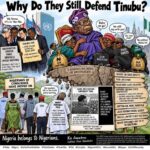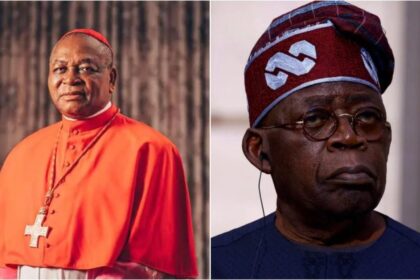
Minerals, health samples, tax cooperation, intelligence sharing: four deals in under ten months, and the Nigerian people have been shown none of them. Nigeria wants to know who authorised what, and what was traded for what.
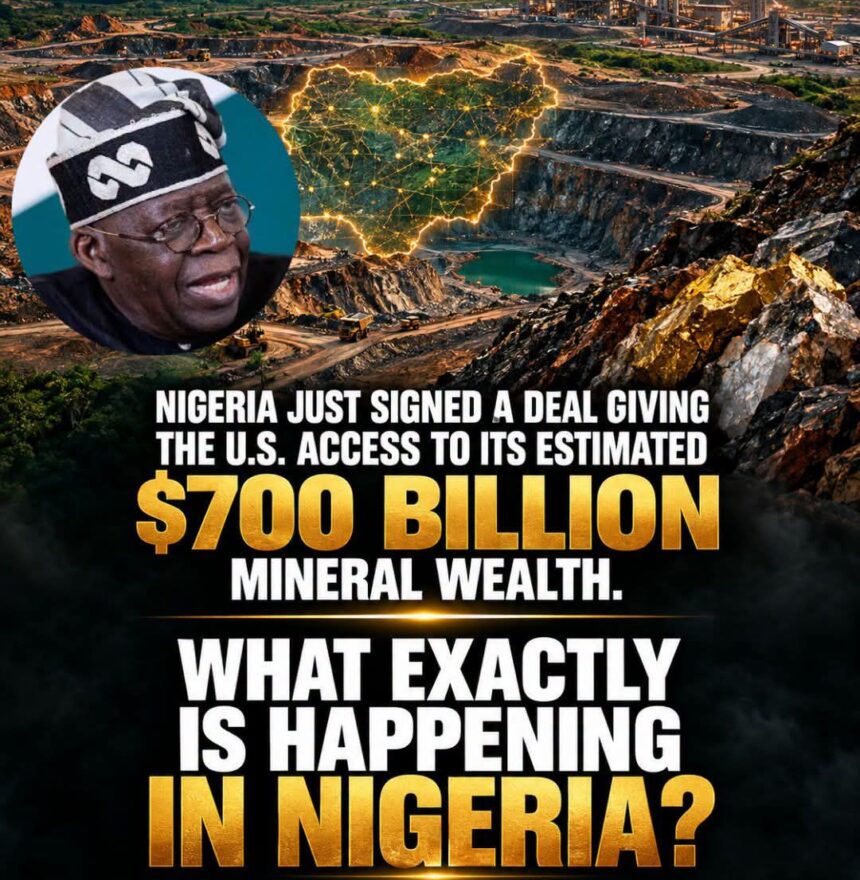
Last Wednesday in New York, Minister Dele Alake put his name beside a U.S. Deputy Secretary of State on a framework covering the geological data, exploration, processing and infrastructure of what the government says is $700 billion in Nigerian minerals. The man Alake serves was in Europe, nearly four weeks into a “working vacation.” He landed back in Abuja on Sunday.
Nigerians have a question, and it is a fair one, whatever you think of the people asking: who is running this country, and who authorised this?
Who signed?
The Presidency says there is no vacuum, and that Tinubu stayed in touch and directed affairs from abroad. The African Democratic Congress, whose candidate for 2027 is Atiku Abubakar and which is therefore no neutral referee, says the constitution knows no category called a working vacation, and that Nigeria is not a private enterprise to be managed remotely from a holiday destination. Atiku asked whether the written declaration to the Senate President and the Speaker was sent before the President left on August 30.
Set that beside the calendar. December 10, 2025: a tax cooperation agreement with France, signed at the French Embassy in Abuja. December 19: a $5.1 billion health compact with the United States. June 23 to 24: a security communiqué with the United Kingdom. September 23: the minerals framework. We found no National Assembly hearing on any of them. Sovereignty is the right of a people to decide what its government agrees to. So far, the people have been shown press releases.
Five days
The one text we can read is the one Abuja did not publish. It sits on the U.S. State Department’s website. Under the Specimen Sharing Agreement, when Washington asks, Nigeria begins handing over specimens and related data within five days, or on a timeline agreed case by case. Nigeria consents to those specimens and data being passed to American entities outside government to develop diagnostics and countermeasures.
A Nigerian outbreak. A Nigerian blood sample. A five-day clock. Then American laboratories, and potentially American companies, building products from what was taken from Nigerian bodies. Zimbabwe read a similar demand, saw no guarantee its people would ever receive what came out of it, and said no. It loses all American health funding at the end of this month. Nigeria said yes. We could not establish from the excerpts available to us whether Nigeria’s text guarantees Nigerians access to anything that results. If it does, show us the clause.
The ADC says something else deserves an answer. The U.S. Embassy’s own statement stresses Christian faith-based providers, and the party puts dedicated support for Christian clinics at about $200 million, a priority it says Abuja’s own account of the deal left out. The party also asks about constitutional non-discrimination and about termination powers that it says subordinate Nigeria’s interests. Nobody in government has told Nigerians why the two governments described the same agreement so differently.
The French connection
The ADC called the France tax memorandum hurriedly and secretly packaged, and asked the question the revenue service never answered: it explained what Nigeria gets, and never what France does. The party says Nigeria has enough local capacity to modernise its tax system without new foreign dependencies, and that under this administration the country has become “more Francophone than the French.”
Its evidence is not hard to find. France has hosted Tinubu on twelve trips totalling more than fifty days, more than any other country, according to travel-spending records reported by Pulse Nigeria. Declarations touching Nigeria’s critical minerals were signed at the Élysée in November 2024. Private dinners followed. On the very week world leaders gathered at the United Nations, the ADC noted with fury that Macron went to New York to represent France while Nigeria’s President stayed on holiday in France’s capital. It called that a national disgrace.
The map to the treasure
Geological data is the first item on the minerals framework, and it is the most valuable. Whoever holds the map sets the price of the treasure. Who sees Nigeria’s survey data, in what form, and before whom? Former senator Shehu Sani called the deal a commendable achievement, then said it was a sovereignty issue that must be treated seriously and that its details should have reached the National Assembly before signing.
Atiku’s own American lobbyists, Von Batten-Montague-York, went further this week, and we report their claim exactly as they made it. They say the mining deal was among proposals Tinubu offered in an effort to secure a meeting with President Trump, that the planned signing at the U.N. in the President’s presence fell through, and that the outcome was: “The United States got the mines; President Tinubu got no meeting.”
The vacuum, and what fills it
Some on Nigerian timelines claim the minerals deal is a payment to keep the President’s American files sealed. On August 28, lawyers for Tinubu asked a Washington court to keep FBI and DEA records about him redacted, on privacy grounds. Nigeria remains on a U.S. religious-freedom watchlist, and the State Department confirmed after talks on August 12 that it stands. The same government is now signing minerals, health and security agreements with Washington.
We do not say those facts are connected. We say that a government that wanted no one to connect them would publish the texts, and that rumours grow where documents are missing. Every day the paper stays hidden, someone will supply a theory to fill the space. That is a debt this administration is running up all by itself.
The Presidency’s reply, and what the opposition says to it
The government has real answers. The revenue service says the France memorandum is advisory, grants no access to taxpayer data, and matches arrangements with the UK and South Africa. Alake says the aim is local processing, not raw export, and Nigerian law bars foreign firms from holding mining licences directly. The framework is described by analysts as non-binding. The U.S. says over 900 Christian faith-based facilities serve more than 30 percent of Nigerians, often where public clinics are scarce. And a country carrying about 30 percent of the world’s malaria burden could not lightly walk away from roughly $2 billion of American assistance.
The opposition’s reply is that none of this requires secrecy. If the deals are good, publish them and take the credit. If they are non-binding, no one loses by showing them. If they are binding, the National Assembly must see them first.
Ten questions for Independence
Nigeria turns 66 this week, and tradition says the President speaks to the nation. Here is what to ask.
- Did you transmit a written declaration to the Senate President and the Speaker before leaving on August 30? If so, who acted?
- Who authorised each of the four signatures, and in writing?
- Will you publish the full minerals framework? Who receives Nigeria’s geological data first?
- Does the health agreement guarantee Nigerians access to any vaccine or treatment developed from Nigerian samples? Which clause?
- Who owns Nigerian pathogen sequence data, and for how long?
- Was any of these agreements negotiated alongside talks over the religious-freedom designation? Yes or no, in writing.
- What does France gain from the tax memorandum? What intelligence will Nigeria share under the UK communiqué, and under whose oversight?
- Why did Abuja’s account of the health compact leave out the Christian-facilities emphasis that Washington stated openly?
- Were minerals offered to secure a meeting with President Trump? Was anything?
- Where will the $3 billion in new domestic health spending come from, when nearly ₦15.8 trillion is earmarked for debt service this year?
On Friday, in his absence, Nigerians were told to give this government more time. The World Bank counts roughly 140 million of them as poor. They are not asking for time. They are asking for the paper.
This is a United Continental Post editorial. It draws on the text of the U.S.–Nigeria Specimen Sharing Agreement published by the U.S. State Department; U.S. Embassy statements; ADC statements reported by Vanguard, Premium Times, ThisDay, Naija News, ICIR and allAfrica; Von Batten-Montague-York’s statement as reported by PM News and Daily Post; Tribune’s report of Shehu Sani’s remarks; U.S. State Department readouts; and reporting by AP, BBC, Reuters and Semafor.