Nigeria’s political history is littered with politicians who have spent decades moving through the corridors of power, changing parties, forming alliances, and presenting themselves as the solution to problems they have, in one form or another, been part of creating.
Former Vice President Atiku Abubakar is one of the clearest examples.
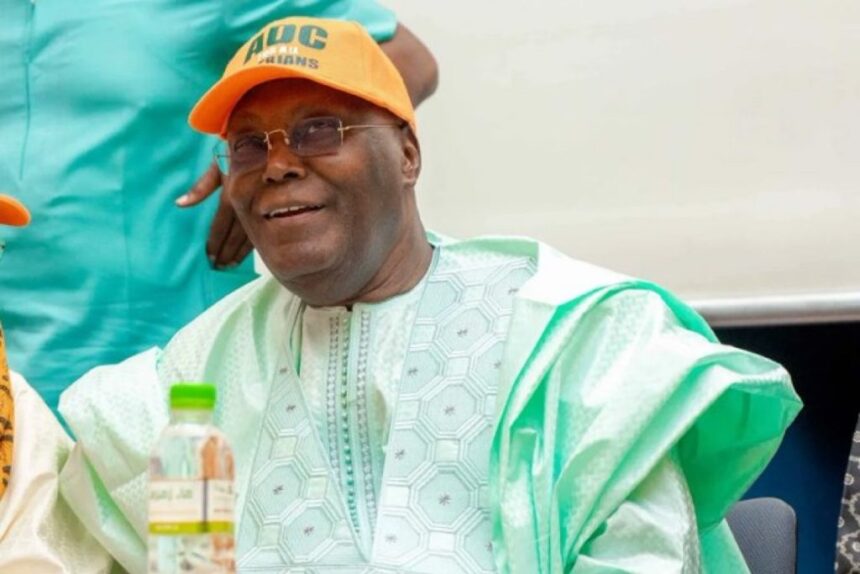
Atiku, who served as vice president between 1999 and 2007, is once again seeking the presidency, this time as the candidate of the African Democratic Congress (ADC) ahead of the 2027 election. The party presents him as an experienced alternative to President Bola Tinubu and the ruling All Progressives Congress. Atiku’s vice-presidential biography, ADC’s candidate submission
But experience is not necessarily the same thing as suitability. For a country searching for a fundamental break from decades of political dysfunction, Atiku’s greatest qualification—his long experience at the centre of Nigerian politics—can equally be regarded as his greatest liability.
There is a strong case for valuing experience in public office. A leader who has served at the highest levels of government should understand how national institutions function, how policy decisions are made and how competing interests shape the work of government. Atiku’s supporters can reasonably point to his years in office and his familiarity with Nigeria’s political and economic system, but experience alone cannot answer the question voters face: what will this candidate do differently?
Nigeria has had many leaders with long political careers. Yet citizens continue to debate the condition of public institutions, security, employment, infrastructure, and the economy. The case for Atiku cannot rest on the claim that he knows how the government works. He must also show how that knowledge would produce better results.
That distinction matters because his career has unfolded within the political order he now promises to challenge. He is not an outsider arriving with no connection to the country’s established networks of power. He has worked within that system, competed for its highest office, and remained a major political figure across successive election cycles. That history does not automatically disqualify him. It does, however, make scrutiny unavoidable.
Atiku’s political record has also been shadowed by corruption-related controversies. These should be discussed carefully. An allegation, an investigative report, an arbitration finding, and a criminal conviction are not interchangeable—and a fair account should not treat them as if they are.
A 2010 report by a U.S. Senate subcommittee described more than $40 million in “suspect funds” transferred into the United States through offshore corporations, in a section discussing Atiku and his then-wife, Jennifer Douglas. That is a serious matter for public scrutiny. It is not, by itself, proof of a criminal conviction. U.S. Senate subcommittee report
The Mambilla Hydroelectric Power Project dispute has brought renewed attention to another controversy. Premium Times, reporting on the arbitration, said the tribunal found that the explanation for a $500,000 payment to Douglas Abubakar, Atiku’s then-wife, was not supported by documentary evidence. The tribunal said the circumstances raised significant red flags. It also stated that the arbitration record contained no evidence that Atiku had used his official duties to foster the award of the contract to Sunrise Power. The tribunal said it could not exclude the possibility that the payment was related to his role in government. Premium Times report on the tribunal’s findings
Atiku denied being indicted by the tribunal. That response belongs in any fair account, alongside the findings and their limits. The arbitration concerned claims brought by Sunrise Power against Nigeria; it should not be presented as a criminal conviction of Atiku. Premium Times report on Atiku’s response
The distinction does not make the questions irrelevant. Candidates seeking control of public resources should expect voters to examine their records, associations and the controversies surrounding their time in office. But the evidence must be described accurately. Calling Atiku corrupt as a fact goes beyond what the findings cited here establish.
The argument against Atiku is strongest when it focuses on political continuity, rather than making claims the evidence cannot support.
Nigeria’s political system has repeatedly seen prominent figures move between parties, build new alliances and return to national office with promises of a fresh direction. Party labels and campaign language can change while many of the people competing for power remain familiar. An opposition candidacy may challenge the party in government without offering a clear break from the wider political system.
That is the tension at the centre of Atiku’s campaign. His experience may help him understand the machinery of power. It may also lead voters to question whether he can transform a system in which he has been a prominent participant for decades.
His supporters can argue that familiarity with government makes him better prepared to lead. Critics can answer that the country needs more than a leader who knows how to navigate existing political structures. They want to know whether he can build institutions that serve the public consistently, rather than depend on the personalities and alliances of the moment.
Both arguments deserve consideration. The burden is on Atiku to explain why his experience should inspire confidence in change, rather than reinforce the expectation of continuity.
Many younger Nigerians are asking for a government that responds to the conditions shaping their lives: limited employment opportunities, insecurity, high living costs and unreliable infrastructure. Their frustration is not simply that older politicians are seeking office. Competence is not determined by age, and a serious critique should not depend on age alone.
The deeper question is whether Nigeria’s political leadership is renewing its ideas and institutions. Years in public life can give a candidate valuable knowledge. They do not automatically demonstrate the willingness or ability to reform the system.
For Atiku, that means setting out a credible programme and explaining how it would be delivered. He should show what he would do to strengthen public institutions, address insecurity, improve the electricity supply and expand productive opportunities. He should explain how his approach would differ from the policies and political practices Nigerians have already experienced. Those are not special demands. They are basic questions for anyone seeking the presidency.
Atiku is not the only veteran politician in Nigeria’s national debate. The same questions about political records, accountability and institutional change should be put to Tinubu and every other contender.
The 2027 election should not become a contest in which voters are asked only to choose which familiar figure they trust more. Candidates should have to explain what they would change, how they would make those changes, and how the public could measure their results.
Atiku has significant political experience. Whether that experience is an asset or a liability will depend on the case he makes to Nigerians. If he can show how his years in government have prepared him to reform the institutions he knows, he can make a serious argument for his candidacy. If he cannot, voters are justified in seeing his return as another chapter in the country’s cycle of political continuity.
Nigeria does not need a president merely because he understands the old political game. It needs a leader who can explain, in practical terms, how he would change it.