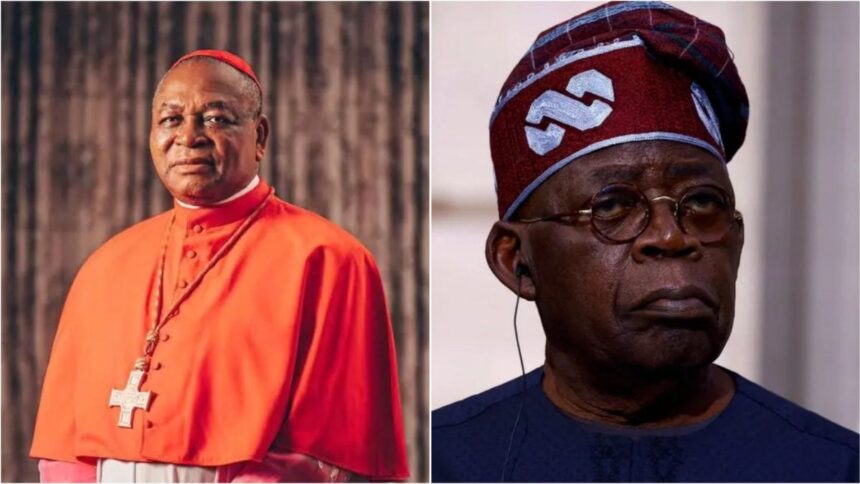
Cardinal John Onaiyekan’s account of a closed-door presidential meeting raises a larger question about whether Nigeria’s leaders seek honest counsel or merely the appearance of consultation.
The test of political leadership is not how warmly a leader receives praise. It is how calmly the leader receives facts that threaten his preferred version of reality.
Cardinal John Onaiyekan’s account of a meeting between President Bola Tinubu and senior Catholic leaders raises an uncomfortable question. Did the Presidency invite the bishops to listen to them, or merely to be seen meeting them?
According to the report supplied as context for the two videos, Onaiyekan believed Tinubu showed little interest in hearing the difficult truths the delegation brought to Aso Rock. The videos place this allegation beside wider concerns raised by Catholic leaders about insecurity, economic suffering, electoral credibility and the risk of Nigeria drifting towards one-party dominance.
The claim deserves scrutiny. It should neither be dismissed because it embarrasses the President nor accepted without question because a cardinal made it.
What is beyond dispute is that Catholic bishops met Tinubu at the Presidential Villa. The meeting included Onaiyekan, Bishop Matthew Kukah and leaders of the Catholic Bishops’ Conference of Nigeria. It took place behind closed doors, while the Presidency disclosed little about the substance of the discussions. (The Guardian)
Such secrecy is common in government. It is also part of the problem.
When leaders invite respected religious figures into private meetings but release only photographs and ceremonial statements, citizens are left with political theatre rather than public accountability. The government controls the official narrative. Participants who later reveal their dissatisfaction are then accused of politicising the encounter.
Consultation without evidence of listening is public relations.
Nigeria’s crisis is too severe for ceremonial dialogue. Citizens face killings, kidnappings, food insecurity, unemployment, declining purchasing power and distrust in state institutions. Onaiyekan has repeatedly argued that the government has no convincing excuse for its inability to suppress kidnapping networks and protect communities. (ACI Africa)
The Catholic bishops have also warned about insecurity, weak institutions, declining electoral participation and the erosion of confidence in political leadership. Onaiyekan has linked falling voter turnout to growing public distrust in elections and has called for credible reforms before the 2027 polls. (Vanguard News)
These are not abstract theological concerns. They are questions about whether the Nigerian state still performs its most basic duties.
The Presidency should therefore resist the lazy instinct to classify every criticism as partisan hostility. Religious leaders, civil society organisations, journalists and opposition politicians do not become enemies of the state merely because they describe conditions the government would prefer to conceal.
A government confident in its performance should welcome scrutiny. A government afraid of scrutiny usually replaces evidence with slogans, critics with praise singers and policy debates with loyalty tests.
Tinubu’s administration has repeatedly promised dialogue and inclusion. The President has also held consultations with religious and traditional leaders. In July, during discussions marking 50 years of diplomatic relations between Nigeria and the Holy See, he praised the work of bishops and called for continued religious harmony. (Catholic Herald)
Warm words are not the same as responsive government.
The important question is what changed after those meetings. Which recommendations did the President accept? Which did he reject? Which security failures were addressed? Which electoral reforms were advanced? Which economic complaints led to policy adjustments?
Without answers, the meetings become photographs of access rather than records of influence.
This weakness extends beyond relations with religious leaders. Tinubu has faced criticism for communicating through aides while avoiding sustained, unscripted engagement with citizens. Peter Obi recently accused the President of relying excessively on spokespersons instead of speaking directly to Nigerians about major national questions. That criticism came from an opponent and should be assessed as such, but it reflects a wider public frustration over presidential accessibility. (Channels Television)
Nigeria does not need a president who speaks every day. It needs one who answers difficult questions when the country demands answers.
A national broadcast filled with prepared achievements is not dialogue. A meeting where visitors deliver brief remarks before officials return to their predetermined positions is not consultation. An audience in which uncomfortable facts are treated as disrespect is not leadership.
Still, the bishops deserve examination too.
Religious office does not grant immunity from criticism. Cardinals and bishops are unelected. They do not possess a monopoly on truth, patriotism or public morality. Their influence should never replace democratic institutions.
If Onaiyekan believes the President refused to listen, he should state the substance of the advice offered, the response received and the consequences of the disagreement, subject to legitimate confidentiality. The public needs more than an impression of presidential unwillingness. It needs enough detail to judge the encounter fairly.
The Catholic Church also needs to guard against selective outrage. It should apply the same standards of transparency, financial accountability and institutional discipline to itself that it demands from government. Moral authority weakens when religious institutions condemn secrecy in public office while tolerating secrecy within their own structures.
Religious leaders must also avoid becoming convenient instruments for political legitimacy. Governments often summon clerics during periods of crisis because religious figures retain credibility that politicians have lost. A photograph with bishops, imams or traditional rulers allows an administration to project unity without addressing the causes of public anger.
The clergy should refuse such use.
A meeting with the President should produce clear commitments, not decorative images. Where no progress follows, religious leaders should say so plainly. Where government responds constructively, they should acknowledge it. Moral criticism loses force when it becomes predictable, partisan or unsupported by specific demands.
The Presidency carries the heavier responsibility because it holds executive power.
Tinubu controls the machinery of government. He appoints ministers, directs security policy, proposes budgets and exercises enormous influence over the ruling party. He cannot treat criticism as an inconvenience while claiming credit for every positive indicator.
Power demands accountability in equal measure.
The administration should establish a more credible system for consultations with major civic and religious bodies. After each meeting, the Presidency should publish a brief issue-and-action document. It should identify the concerns raised, the agencies responsible for responding and the expected timelines. Sensitive national security details should remain protected, but policy commitments should not disappear behind the gates of Aso Rock.
Nigeria’s leaders also need advisers who are willing to risk access by speaking honestly. A government surrounded by people who agree with the President will eventually lose contact with the country it governs.
The danger is not merely personal pride. Leaders who stop hearing bad news start making decisions based on false information. Ministers soften reports. aides conceal failures. loyalists explain away public anger. By the time reality reaches the leader, the damage has grown more expensive to repair.
That is how governments become surprised by protests, election losses, market reactions and security breakdowns that citizens saw coming months earlier.
Onaiyekan’s allegation therefore matters beyond one meeting. It speaks to the quality of decision-making at the centre of government.
Tinubu does not have to agree with the bishops. He does have to listen, question, respond and explain. The bishops do not have to flatter the President. They do have to remain factual, consistent and transparent about the reforms they demand.
Nigeria needs neither a hostile church nor a submissive one. It needs religious institutions willing to confront power without seeking to capture it.
It also needs a Presidency mature enough to understand that criticism is not insubordination.
When citizens and respected institutions repeatedly say that insecurity is intolerable, elections lack trust and hardship is breaking families, a responsible government does not ask who authorised them to speak. It asks whether they are right.
Aso Rock must stop treating access as proof of dialogue. Opening the presidential gates to visitors means little if the truth remains locked outside.