The World Bank is in discussions with between 30 and 40 countries over potential emergency financial assistance to cushion the impact of soaring energy and fertiliser prices triggered by the ongoing Middle East war.
The bank’s president, Ajay Banga, disclosed this in an interview with in Bangkok on Saturday, warning that developing economies could face mounting financial pressure in the coming months as rising energy costs, high interest rates and worsening debt burdens threaten their economic stability.
According to him, the global economy has remained relatively resilient since the conflict began in late February, partly because of substantial investments in artificial intelligence and adjustments in global oil supply and demand. These factors have helped limit the immediate demand for emergency assistance from the World Bank.
However, the recent surge in diesel and fertiliser prices, alongside the threat of a potentially severe El Niño weather phenomenon, has heightened concerns about the economic outlook for developing countries.
Banga said the World Bank had initially made $25bn available to help countries respond to the crisis, with an additional $35bn accessible through the redirection of resources from previously approved projects.
He indicated that demand for the funds could increase if economic conditions deteriorated further.
“There is pressure, and so I think maybe over the coming months, more countries will come for some slice of that first $50 to $60 billion,” he said.
Banga added that the bank was already engaging countries seeking assistance, noting that discussions with between 30 and 40 governments were ongoing.
He said more countries had expressed interest in restructuring existing World Bank-supported projects to address immediate financial pressures than in accessing the dedicated emergency funding window.
The bank could increase its crisis financing to as much as $100bn if the situation worsened, Banga said. The proposed amount would exceed the $70bn it disbursed during the COVID-19 pandemic to help countries manage the economic consequences of the global health emergency.
Developing economies are particularly vulnerable because many are still grappling with depleted public finances following the pandemic and the inflationary pressures that followed Russia’s invasion of Ukraine.
The combination of elevated borrowing costs and rising energy prices has further complicated their efforts to finance public services, support economic growth and meet debt obligations.
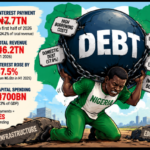
World Bank estimates indicate that developing countries owe external creditors approximately $400bn in 2026, with interest payments accounting for about one-third of the total.
The mounting debt burden has intensified concerns about the ability of vulnerable economies to finance development programmes while meeting their financial obligations.
Beyond emergency assistance, the World Bank is seeking to mobilise more private investment to support economic growth, particularly as Western governments reduce official bilateral development aid.
Banga said the bank attracted a record $112bn in private capital in the year ended June 2026, up from $69bn in the preceding year and more than three times the amount recorded in 2022.
The private capital mobilisation was complemented by $123bn in financing from the bank’s own resources, bringing the combined total to $235bn during the period.
Banga said the figures demonstrated the importance of mobilising different sources of financing to meet the growing development needs of countries facing fiscal constraints.
“There is no one answer that fits when the world has these kinds of issues. What you need to do is figure out how to cut your coat to suit your cloth,” he said.
He expressed optimism that private capital flows would continue to increase in the coming years, supported by expanded political risk guarantees through the bank’s Multilateral Investment Guarantee Agency, greater access to local-currency financing and regulatory reforms designed to make developing economies more attractive to foreign investors.
However, he acknowledged that the increase in private investment had not been evenly distributed, with low-income countries continuing to struggle to attract sufficient funding.
Upper-middle-income economies, including Argentina and India, accounted for approximately $50bn of the private capital mobilised, while lower-middle-income countries, including Bangladesh and Angola, attracted $37bn.
By contrast, private capital flows to low-income countries stood at about $3bn, highlighting the significant financing gap confronting some of the world’s most vulnerable economies.
“In the smaller countries, it hasn’t multiplied enough, and there are challenges,” Banga said, adding that the bank would announce new initiatives aimed at improving access to private financing for micro, small and medium-sized enterprises.
Regionally, Latin America and the Caribbean recorded the largest share of private capital mobilisation, attracting $36.3bn. Africa followed with $22bn, while Europe and Central Asia accounted for $21.3bn and South Asia received $19.2bn.
The World Bank identified Brazil, India, Turkey, Romania, Nigeria, Argentina, South Africa, Bangladesh, Mexico and Chile as the 10 largest recipient countries.
Meanwhile, the World Bank and the International Monetary Fund are intensifying efforts to address the debt challenges confronting developing economies, including initiatives to strengthen domestic revenue mobilisation and improve debt sustainability.
As part of the strategy, the World Bank is expanding debt-for-development swaps, which allow participating countries to refinance expensive existing debt with more favourable financing arrangements backed by the bank’s guarantees.
The savings generated can then be channelled into priority sectors, including education, healthcare, water infrastructure and environmental protection.
Banga said the bank had already established such arrangements for Angola and Ivory Coast, while a portfolio-based guarantee had been developed for Argentina.
He disclosed that another 14 to 15 debt-for-development transactions were in the pipeline, reflecting the bank’s efforts to ease debt-servicing pressures while freeing up resources for essential development programmes.
The initiatives come as developing countries face growing competition for scarce financing, rising external debt obligations and renewed economic uncertainty stemming from geopolitical conflicts and volatile commodity prices.