Tokyo police are developing an artificial intelligence-powered system to reconstruct road accidents digitally, a move that could transform traffic investigations but has raised concerns about the reliability of AI-generated evidence.
The proposed system, being developed by the Tokyo Metropolitan Police Department, will combine artificial intelligence with security camera footage and three-dimensional spatial data collected by camera-equipped mapping vehicles to recreate traffic accidents.
According to a report by The Japan Times, investigators will be able to use the technology to measure vehicle speeds, determine distances between vehicles and replay accident scenes from different perspectives. These could include overhead views and simulations showing how the incident might have appeared to nearby motorists or pedestrians.
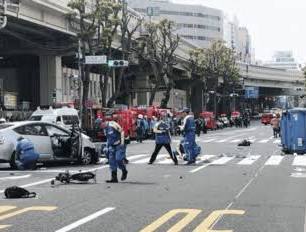
The initiative is expected to reduce the time and resources spent on conventional accident investigations, which often require officers to visit crash scenes physically. Such inspections can involve road closures, disrupt traffic and cause congestion, particularly in busy urban areas such as Tokyo.
The police reportedly plan to begin testing the technology in June 2027, with full-scale operations potentially commencing in January 2028.
However, questions remain over the accuracy and credibility of evidence produced through artificial intelligence, particularly as generative AI systems have increasingly demonstrated their capacity to fabricate information or produce misleading results.
The concerns are especially significant because digitally reconstructed accident scenes could influence police investigations, insurance claims and potentially court proceedings. An inaccurate reconstruction could distort the circumstances surrounding an accident, create doubts about responsibility and undermine the credibility of an investigation.
The challenges are not entirely new. Courts in the United States and other countries have increasingly confronted cases involving fabricated legal citations, inaccurate AI-generated documents and digitally manipulated audio and video evidence.
In 2024, police in Pune, India, reportedly considered deploying an AI-powered digital reconstruction system to investigate a high-profile drunk-driving accident that killed two pedestrians. However, it remains unclear whether the technology was eventually implemented or used in court.
Researchers are also exploring similar applications beyond traffic investigations. In July, a team from the Technical University of Munich and Bavaria’s State Criminal Police Office in Germany demonstrated an AI system designed to process thousands of crime-scene photographs and generate digital reconstructions.
The technology can reportedly identify and classify objects within a crime scene, allowing investigators to virtually examine the location and analyse evidence long after the physical scene has been altered or cleared.
Researchers at Hasselt University in Belgium are also developing a system that uses multimodal language models to support digital crime-scene reconstruction, with potential applications in law enforcement and insurance investigations.
Nevertheless, the growing use of AI-generated evidence has triggered resistance within the legal system.
In June, a judge in Mississippi reportedly halted proceedings in a civil trial after discovering that lawyers on opposing sides had relied on fabricated, AI-generated court filings.
Similarly, in 2024, a Washington State judge barred defence lawyers in a murder case from presenting cellphone footage that had been digitally enhanced using AI software. The judge expressed concern that admitting the footage could confuse the issues and undermine eyewitness testimony.
The American Civil Liberties Union has also warned that the increasing use of AI by police departments to analyse evidence and prepare reports could remove important human elements from law enforcement procedures.
For Tokyo, the proposed accident reconstruction system represents an opportunity to modernise investigations, improve efficiency and minimise disruptions caused by road inspections.