Iran has exempted ships from India, China, Iraq and Qatar from restrictions on passage through the strategically important Strait of Hormuz, in a move that could undermine the effectiveness of the United States naval blockade and strengthen Tehran’s economic and diplomatic leverage.
Amir Hayat Moqaddam, deputy chairman of the Iranian parliament’s National Security and Foreign Policy Committee, disclosed this on Tuesday, saying vessels from the four countries could pass freely without interception by American forces.
“Ships from these countries pass freely, and the Americans do not intercept them either,” he told the Iranian Students’ News Agency (ISNA).
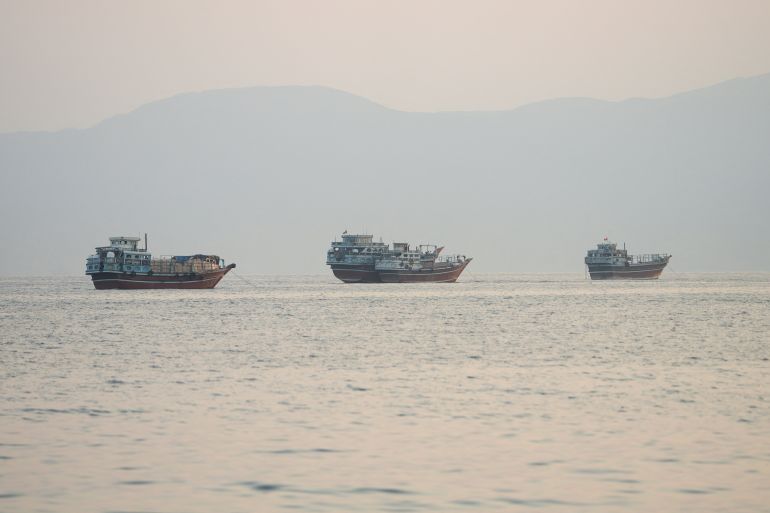
Iran effectively closed the strait following the outbreak of the US-Israel war on February 28, while Washington reimposed a naval blockade on Iran’s southern ports in July.
The exemptions are believed to be part of Tehran’s strategy to secure essential supplies, generate revenue and strengthen diplomatic alliances as the conflict continues.
According to Hayat Moqaddam, Iran expects to receive pharmaceutical supplies from India and political support from China in return for allowing their vessels passage. Tehran will also collect transit fees from Indian and Chinese ships, while Qatari vessels will be exempt from payment. He did not clarify whether Iraqi vessels would be charged.
Iran analyst Rouzbeh Parsi of Lund University said the arrangement reflected Tehran’s longstanding practice of using barter agreements and reciprocal trade arrangements to circumvent international sanctions.
He noted, however, that the current strategy was aimed at creating openings in the blockade to facilitate the movement of essential goods and services.
Nader Hashemi, an associate professor of Middle East politics at Georgetown University, suggested that Iran was probably collecting transit fees or a percentage of cargo values from vessels granted passage.
Security analyst Wolfgang Pusztai described the move as a calculated attempt to generate revenue and weaken international support for Washington’s strategy.
China, which purchases nearly 90 per cent of Iran’s oil exports, stands to benefit significantly from the arrangement. India and Qatar also have substantial economic interests in maintaining access to the waterway.
The importance of the exemptions is underscored by the volume of oil transported through the strait. Of the 10.23 million barrels of Gulf crude that passed through it in October, approximately 42 per cent went to China and 13 per cent to India, according to Kpler senior crude oil analyst Muyu Xu.
India also has an important advantage for Tehran as a major pharmaceutical producer, particularly because Iran cannot manufacture some essential medicines locally.
Meanwhile, Qatar has maintained diplomatic engagement with Tehran while leading mediation efforts to end the conflict.
Despite the announcement, the exemptions are not entirely new as Iran began allowing vessels from countries it considers friendly to use the waterway within weeks of the war’s outbreak, while its military command also announced an exemption for Iraq in April.
However, whether the arrangement can survive Washington’s naval blockade remains uncertain.
The US Central Command (CENTCOM) has maintained that its blockade covers all vessels, regardless of nationality, entering or leaving Iranian coastal areas and ports. Ships travelling through the strait without calling at Iranian ports are not covered by the restrictions.
Washington has also indicated that humanitarian shipments, including food and essential medical supplies, may be permitted following inspection.
Pusztai warned that if Iran’s exemptions also covered Chinese and Indian vessels travelling to and from Iranian ports, the development could significantly complicate the American blockade.
He said the arrangement could reduce the effectiveness of Washington’s strategy if the United States chose not to challenge the Iranian decision.
Questions also remain over what qualifies a vessel for exemption, including whether eligibility depends on its national flag, ownership or operator.
Meanwhile, lifting the American blockade remains one of Tehran’s conditions for committing to broader peace negotiations with Washington, which are expected to include discussions on Iran’s nuclear programme.
Qatar-mediated negotiations currently centre on an Iranian proposal to reopen the strait in exchange for Washington meeting seven conditions, including lifting sanctions and ending the blockade.
Analysts believe Tehran is attempting to separate the issue of freedom of navigation through the Strait of Hormuz from negotiations over its nuclear programme.
On the global oil market, however, the exemptions are unlikely to produce an immediate significant impact.
Chris Beauchamp, chief market analyst at IG Group, said the development would have only a limited effect on oil prices for now, as markets remain focused on the possibility of a broader peace agreement.
He warned that renewed hostilities could quickly undermine the arrangement, leaving vessels exposed to attacks regardless of their national affiliations.
The risks remain evident despite Iran’s assurances.
On October 30, a Qatari liquefied natural gas carrier, Al Mayeda, was struck by unidentified objects in the Gulf, according to its owner, Qatar Gas Transport Company.
More than 120 commercial vessels have been attacked in the region since the war began, with October recording the highest number of incidents, according to the International Maritime Organization and the United Kingdom Maritime Trade Operations.
ALJ