GHANA has reached an agreement with Tullow Oil to develop a roadmap for resolving a $393m tax liability upheld by an international arbitration tribunal, as the government renews its commitment to securing up to $2bn in investment in the country’s Jubilee and Tweneboa-Enyenra-Ntomme (TEN) offshore oilfields.
President John Dramani Mahama announced the development on November 10 at the Local Content Conference in Takoradi, describing the investment plans as critical to sustaining oil production, expanding gas output and strengthening Ghana’s petroleum industry.
The tax dispute followed a ruling by the International Chamber of Commerce (ICC), made public by Ghana’s Finance Ministry on September 30, which upheld the Ghana Revenue Authority’s assessment against Tullow Ghana.
The liability comprises $196.5m in corporate income tax on proceeds from business interruption insurance covering the 2016–2019 financial years, alongside a 100 per cent penalty, bringing the total assessment to approximately $393m.
However, the terms of the newly agreed roadmap have not been disclosed, and the arrangement does not constitute a final settlement, while dscussions are also expected to address a separate $190.5m tax assessment relating to disallowed deductions on intercompany loan interest between 2010 and 2020.
Meanwhile, arbitration proceedings over the second dispute have been postponed until 2027.
Tullow had expressed disappointment with the September ruling and said it would consider its options, sharing reportedly plunged by as much as 45 per cent following the decision.
The resolution of the dispute is particularly important to the London-listed oil producer, which reported net debt of approximately $1.4bn at the end of June and has been disposing of assets in Gabon and Kenya to concentrate its operations on Ghana’s Jubilee and TEN fields.
$3.5bn investment commitments
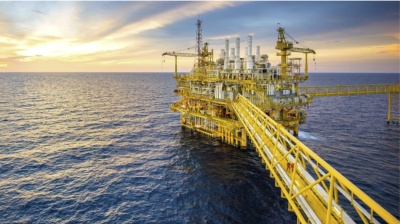
Beyond the tax negotiations, Mahama reaffirmed plans for up to $2bn in investment in the Jubilee and TEN fields, alongside a separate $1.5bn commitment by partners in the Offshore Cape Three Points (OCTP) project, bringing the combined investment commitments to $3.5bn.
The investments are expected to support additional drilling, subsea infrastructure development and the expansion of existing production facilities.
The President said the Jubilee investment would help sustain crude oil production while increasing natural gas output, reinforcing the government’s ambition to reverse the country’s prolonged decline in petroleum production.
The Jubilee and TEN investment programme was initially announced in June 2025 and formed part of the basis for extending the West Cape Three Points and Deep Water Tano petroleum agreements to December 31, 2040. Ghana’s Parliament ratified the extensions in February 2026.
Under the extended agreements, up to 20 additional wells can be drilled at Jubilee. Tullow completed a six-well drilling campaign in September and has secured a rig for up to 10 additional wells between 2027 and 2028.
Tullow operates the Jubilee field with a 38.98 per cent interest, while Kosmos Energy holds 38.61 per cent, the Ghana National Petroleum Corporation (GNPC) owns 19.69 per cent and South Africa’s state-owned PetroSA controls the remaining 2.72 per cent.
Ghana targets lower gas costs, higher production
Mahama also disclosed that revised commercial terms were expected to reduce the price of gas supplied from the Jubilee field by approximately 18 per cent, potentially saving Ghana an estimated $300m.
Similarly, a renegotiated gas sales agreement with Italian energy company Eni, the operator of the OCTP project, is expected to reduce the average gas price from the field by 23 per cent, generating projected savings of about $3.5bn over its remaining operational life.
The government sees the revised agreements as an opportunity to reduce the financial burden of gas purchases while improving the commercial value of the country’s petroleum resources.
On production, Mahama said Ghana’s crude oil output had recovered to more than 120,000 barrels per day from a low of approximately 88,000 barrels per day.
However, the country’s production has faced years of decline as data from the Public Interest and Accountability Committee show that annual crude oil output fell for six consecutive years to 37.3 million barrels in 2025, compared with a peak of 71.44 million barrels in 2019.
Figures from the Petroleum Commission, however, indicate an improvement in the first half of 2026, when production reached 20.58 million barrels, representing an 11.7 per cent increase compared with the corresponding period of 2025.
Upstream reforms, exploration gather pace
Meanwhile, Ghana is pursuing reforms to its upstream petroleum industry to attract fresh investment and improve the competitiveness of its oil and gas sector.
Chief Executive of the Petroleum Commission, Emeafa Hardcastle, disclosed that the Ministry of Energy and Green Transition had completed a review of the country’s upstream petroleum legal, regulatory and fiscal framework.
The proposed reforms have been submitted to the Cabinet and will require parliamentary approval before implementation.
Hardcastle also said regulatory processes were progressing on the development plan for the Eban-Akoma discovery in Cape Three Points Block 4, which an Eni-led joint venture declared commercially viable in July 2025.
In another exploration development, GNPC’s exploration subsidiary, Explorco, has identified a potential drilling location in the northern Voltaian Basin and is seeking a drilling rig, with operations targeted for late 2026 or early 2027.
The developments highlight Ghana’s efforts to revive petroleum production, attract investment and strengthen the financial returns from its offshore resources, even as the government works to resolve outstanding tax disputes with major industry operators.