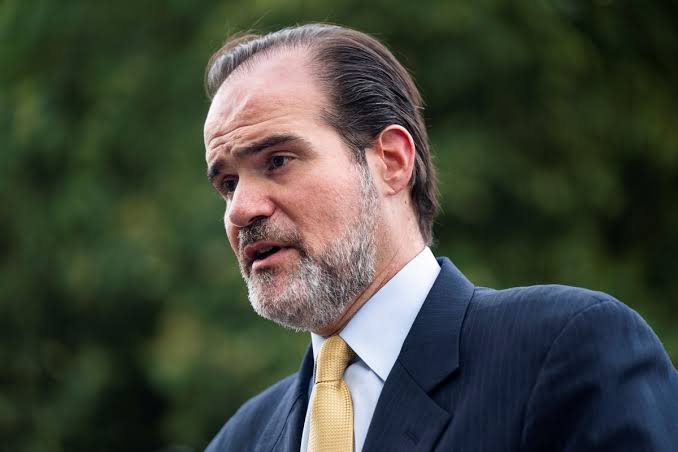
Mauricio Claver-Carone, a prominent adviser who played a significant behind-the-scenes role in shaping the Trump administration’s Venezuela policy, has stepped away from his involvement in the country’s affairs, creating fresh uncertainty over ongoing U.S.-Venezuela economic and energy initiatives.
Although Claver-Carone did not hold an official government position, he reportedly advised U.S. Secretary of State Marco Rubio on Venezuela-related matters and was widely regarded as one of Washington’s most influential figures on the issue.
Claver-Carone confirmed that he had ended his involvement voluntarily, saying the administration had established a broader inter-agency framework and strengthened its diplomatic operations.
“I am retired on Venezuela,” he said.
However, multiple sources familiar with the matter told Reuters that his departure followed internal concerns within the administration regarding the extent of his influence over policy and commercial negotiations.
His exit comes at a critical stage as the United States seeks to reopen Venezuela’s oil industry, restructure the country’s defaulted sovereign debt and encourage greater American investment following the political changes that led to the removal of former President Nicolás Maduro earlier this year.
Key role in oil and debt negotiations
During his involvement, Claver-Carone reportedly played a central role in discussions covering Venezuela’s energy sector, debt restructuring and investment opportunities.
He was instrumental in supporting the appointment of financial advisory firm Centerview Partners to oversee the restructuring of approximately $200 billion in Venezuelan sovereign liabilities. The mandate, reportedly worth more than $150 million, attracted criticism after being awarded without a competitive bidding process.
Several creditors and financial advisers questioned the selection process, noting that Centerview had limited experience handling sovereign debt restructurings.
Claver-Carone also participated in negotiations involving oil development projects and reportedly influenced discussions on commercial access to Venezuelan assets. He helped facilitate planned talks between the Venezuelan government and opposition representatives aimed at advancing political and economic reforms.
Although his departure does not automatically affect existing agreements, analysts say it removes a key intermediary who connected U.S. officials, Venezuelan authorities and private investors.
Conflict-of-interest concerns
Claver-Carone’s unofficial status generated debate within diplomatic and investment circles.
While exercising considerable influence over U.S. policy toward Venezuela, he remained a private citizen and continued to oversee the Latin America Real Assets Opportunity Fund, a private investment vehicle.
The dual role prompted questions from some officials and investors about potential conflicts of interest, particularly given his involvement in decisions with significant commercial implications.
Claver-Carone has denied any financial interest in Venezuela, maintaining that neither he nor his investment fund has investments linked to the country.
Reports also indicated that former U.S. Ambassador Richard Grenell raised concerns with President Donald Trump regarding Claver-Carone’s growing influence. However, a U.S. administration official denied suggestions that he had become a source of internal conflict within the White House.
Claver-Carone also acknowledged working with Venezuelan businessman Alejandro Betancourt as an intermediary in discussions with Venezuelan authorities. Betancourt, who has previously faced corruption and money-laundering investigations in several jurisdictions, has consistently denied any wrongdoing.
State Department responds
The U.S. State Department rejected suggestions that Claver-Carone had been formally removed from office, noting that he never occupied an official government position.
A department spokesperson stated that claims he had been “forced out” of a formal role were inaccurate.
The statement, however, did not directly address whether the administration had requested that he discontinue his informal advisory activities.
Before stepping back, Claver-Carone served as President Trump’s special envoy for Latin America during the early months of the administration’s second term. He also helped design the sanctions strategy against the Maduro government during Trump’s first presidency and later served as president of the Inter-American Development Bank.
Policy direction expected to continue
Despite Claver-Carone’s departure, U.S. policy toward Venezuela is not expected to change immediately.
Assistant Secretary of State for Economic, Energy and Business Affairs Caleb Orr remains closely involved in Venezuela policy, while Secretary of State Marco Rubio continues to oversee the administration’s overall strategy.
Washington’s priorities remain centred on reopening Venezuela’s energy sector, restructuring its sovereign debt and expanding opportunities for American businesses.
Nevertheless, Claver-Carone’s exit introduces uncertainty for energy companies, investors and creditors seeking clarity on future negotiations, the implementation of existing agreements and the pace of Venezuela’s economic restructuring.