China’s economy lost further momentum in July, with weak consumer spending, a sharper investment decline and rising unemployment adding to pressure on Beijing to introduce stronger measures to support growth in the second half of the year.
Data released by the National Bureau of Statistics showed that retail sales rose by just 0.6 percent year-on-year in July, falling short of the 1.5 percent growth forecast by economists in a Reuters poll and slowing from the one percent increase recorded in June.
Urban fixed-asset investment also weakened significantly, declining 6.7 percent in the first seven months of the year compared with the same period last year. The figure was worse than the six percent decline expected by analysts and marked a further deterioration from the 5.7 percent contraction recorded in the first half.
Industrial production provided little relief, increasing 4.5 percent in July. The growth was below the 4.8 percent forecast and represented a slowdown from the 5.3 percent expansion recorded in June.
The urban unemployment rate also edged higher, reaching 5.2 percent in July compared with five percent in June, highlighting continued pressure in the labour market.
The figures, released later than usual at 3 p.m., have renewed concerns about the health of the world’s second-largest economy, which continues to struggle with a widening imbalance between supply and demand.
Industrial production and exports linked to the global artificial intelligence investment boom have helped offset weak domestic consumption and private investment. However, the latest figures suggest that these sources of support may also be losing momentum.
The statistics bureau said China must accelerate the transition towards new growth drivers, while calling for deeper reforms and greater economic opening.
At a press briefing, bureau spokesperson Fu Linghui attributed some of July’s weakness to geopolitical pressures abroad and high temperatures at home. He acknowledged that several key economic indicators softened but noted that services retail sales grew five percent during the first seven months of the year.
Fu said exports, emerging growth drivers and supportive macroeconomic policies would help China achieve its annual growth target despite the economic shocks caused by extreme weather in July.
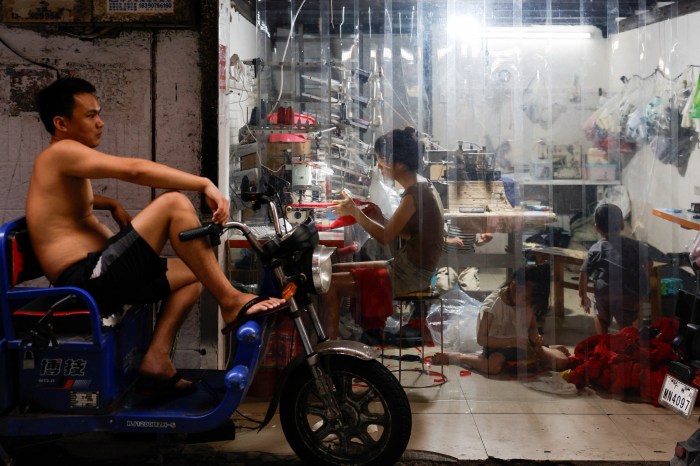
Consumer spending remains a major concern. According to Goldman Sachs, nominal retail sales growth slowed to 1.3 percent in the first half of the year from five percent during the same period last year.
The slowdown has been partly linked to the fading impact of government trade-in subsidies, which encouraged consumers to bring forward purchases and are now providing less support to overall demand.
China’s consumer inflation also weakened in July, with headline inflation easing to a six-month low of 0.5 percent, while core inflation, excluding food and energy, increased by 0.9 percent.
Weak consumer demand has also been reflected in lending activity. New bank loans issued in July recorded their largest monthly decline on record, according to Barclays, while household borrowing, including mortgages, contracted after a brief recovery in June.
The property downturn remains another major drag on the economy. Investment in real estate fell 19.2 percent in the first seven months of the year, while infrastructure and manufacturing investment declined by 3.6 percent and 1.7 percent respectively.
The weak investment environment is also affecting employment, with a private survey led by Tsinghua University economist Li Daokui estimating China’s broader unemployment rate at 10.2 percent in July, considerably above the official figure.
Official youth unemployment stood at 14.9 percent in June, while the private survey found that more than half of the estimated 24 million long-term unemployed were between 16 and 24 years old.
Despite the broad weakness, investment in high-tech sectors remained comparatively resilient, rising five percent year-on-year during the first seven months. The sector includes information services, aerospace and equipment manufacturing, suggesting that Beijing’s push towards new technology-driven growth remains one of the brighter areas of the economy.