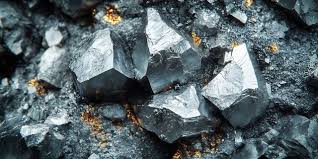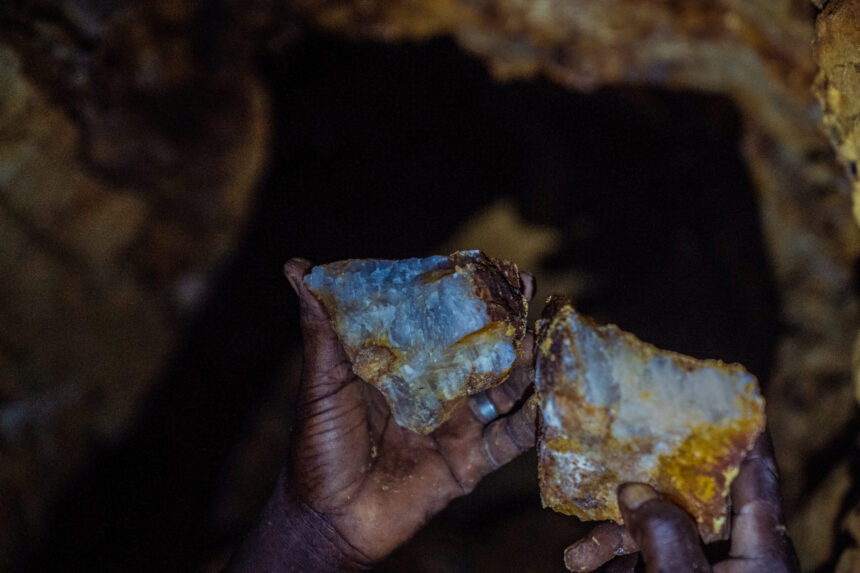
Guinea has moved to tighten control over its gold industry, banning the export of raw gold as the government seeks to increase local processing and ensure greater economic benefits from the country’s mineral wealth.
The move is part of a broader strategy by President Mamady Doumbouya’s administration to shift Guinea away from exporting largely unprocessed commodities and towards greater domestic value addition.
Guinea is one of West Africa’s leading gold producers and is also endowed with vast deposits of bauxite, diamonds and iron ore, including the giant Simandou project, which began production in November after years of delays.
Despite its considerable mineral wealth, the country has struggled to translate natural resources into widespread prosperity, with critics arguing that much of the value generated from mining has historically accrued to a limited group of beneficiaries.
The new gold policy comes as Guinea seeks to capitalise on renewed investor interest in its mining sector following progress on Simandou, regarded as the world’s largest untapped high-grade iron ore deposit.
At the end of June, Doumbouya banned exports of raw gold, requiring the mineral to undergo processing within the country before being exported.
The policy coincides with the construction of a gold refinery in Conakry, which has an annual refining capacity of about 250 tonnes, significantly above Guinea’s recent official export volumes.
In the first quarter of 2025, Guinea exported about 22 tonnes of gold, highlighting the substantial capacity available at the new facility.
The government argues that refining gold domestically will allow Guinea to capture more value from its mineral resources, while creating opportunities for local businesses and employment.
Gold prices have also strengthened considerably in recent years, reaching a record of about $5,600 per ounce in January 2026 before retreating to around $4,400, increasing the economic significance of the sector.
Authorities have warned that mining companies that fail to comply with the new rules could face the revocation of their licences and termination of their mining contracts.
The government has demonstrated its willingness to take action against mining companies over local processing commitments. Last year, it took over Guinea Alumina Corporation, the local bauxite subsidiary of Emirates Global Aluminium, following disputes over commitments to build an alumina refinery.
The tougher approach has also generated legal challenges. Emirati company Falcon Energy Materials has initiated arbitration proceedings against Guinea, seeking $100 million over what it describes as the illegal expropriation of the Lola Graphite Project and other alleged treaty breaches.
Guinea’s policy reflects a broader trend across Africa, where governments are increasingly seeking to stop the export of unprocessed minerals and encourage domestic beneficiation.
Ghana plans to end unprocessed gold exports by 2030, while Uganda and Tanzania have already introduced restrictions on exports of raw minerals. The Democratic Republic of Congo has also moved to restrict copper concentrate exports as it seeks to expand domestic processing.
Guinea plans to channel at least 0.5 percent of mining companies’ profits into local development funds, while a proposed sovereign wealth fund is expected to finance infrastructure and social projects, including schools, hospitals, agricultural schemes and roads.
The government also aims to establish additional alumina processing plants by 2030 as part of efforts to deepen mineral transformation and reduce dependence on the export of raw materials.
However, the new gold rules have raised concerns among mining companies over policy certainty. Some operators reportedly have contractual provisions granting them export freedoms, which could potentially be used to challenge the new restrictions.
Industry observers have also questioned whether Guinea has sufficient infrastructure and administrative systems to support the policy, including reliable electricity, customs procedures, certification mechanisms and efficient export processes.
The challenge could be particularly significant for artisanal miners, who reportedly exported about 50 tonnes of gold to neighbouring countries in 2025. Without adequate support, transporting raw gold to the refinery could increase costs and encourage some operators to rely on informal or smuggling channels.
Despite the concerns, the policy is expected to receive significant public support, as many Guineans have long demanded greater benefits from the country’s natural resources. The government is betting that local refining and mineral processing will help transform Guinea’s resource wealth into broader economic development.