Iran is awaiting a formal response from Washington after US President Donald Trump rejected Tehran’s proposal linking the reopening of the Strait of Hormuz to a seven-day halt in fighting across the Middle East and the resumption of nuclear negotiations. Trump confirmed on Saturday that he had rejected the Iranian proposal, leaving a diplomatic initiative presented during the United Nations General Assembly in New York in doubt.
The development has further complicated efforts to end the seven-month-old conflict, with the strategic waterway remaining at the centre of the confrontation. The latest diplomatic exchanges suggest that while channels between Washington and Tehran remain open through intermediaries, the conditions demanded by both sides remain far apart.
Iran had transmitted its proposal to the United States through Qatari mediators, according to Iranian officials. Under the plan, the Strait of Hormuz would be reopened within seven days of Washington accepting the initiative, while fighting across the region would be suspended.
Iranian Foreign Minister Abbas Araghchi said the initial steps would take several days, with the waterway expected to reopen by the sixth day and broader negotiations with Washington beginning on the seventh. The proposal was presented as a pathway towards a wider agreement rather than simply an arrangement for maritime traffic.
In return, Tehran wants the United States to lift its blockade of Iranian ports, ease or waive sanctions affecting Iranian oil exports and release frozen Iranian funds. Iran has also indicated that it would resume discussions over its nuclear programme once an agreement on the immediate conditions was reached.
The nuclear issue is expected to remain one of the most difficult subjects in any future negotiations. Washington has repeatedly demanded guarantees that Iran will not acquire a nuclear weapon, while Tehran has maintained that it has rights under the nuclear non-proliferation framework and has resisted demands it regards as coercive.
A senior Iranian official has also indicated that Tehran would not accept restrictions on uranium enrichment or agree to transfer its highly enriched uranium outside the country. Such positions underline the distance that remains between the two sides even as diplomatic contacts continue.
The reported US rejection therefore leaves the central question unresolved: whether Washington and Tehran can agree on an initial sequence of steps capable of stopping the fighting and reopening the waterway before negotiations on the more complicated nuclear and security issues begin.
A US official had earlier described indirect discussions with Iran through mediators as positive and constructive, suggesting that diplomatic communication had not completely broken down. However, Trump’s rejection of the Iranian proposal demonstrates that the existence of talks does not necessarily mean the two sides agree on the terms or timetable.
Trump’s Expectations
The Wall Street Journal has reported that Trump remains sceptical about whether Iran would fulfil Washington’s demands and expects renewed US military action could follow the November midterm elections. That report was based on unnamed US officials and represents an assessment attributed to Trump’s thinking rather than a confirmed decision to resume attacks.
The conflict, which began with US and Israeli attacks on Iran on February 28, has since moved through periods of intense fighting and temporary pauses. Thousands have been killed, while Iran’s conventional military capabilities and economy have suffered substantial damage, according to reports.
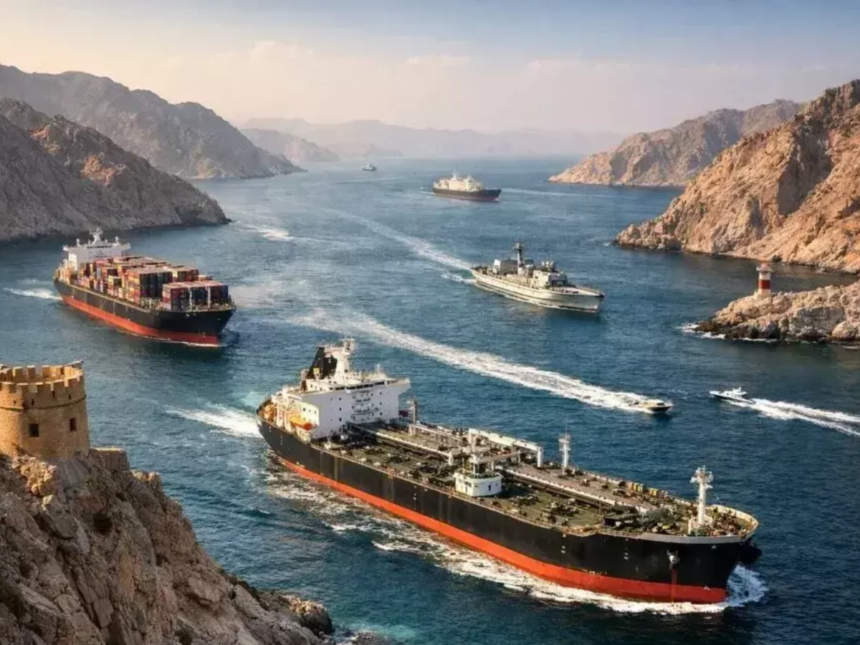
The continuing crisis around Hormuz has consequences far beyond Iran and the United States because the waterway is a major route for international energy shipments. Disruption has already affected oil flows and contributed to uncertainty in global energy markets.
Iran has also been engaging neighbouring Gulf states as diplomatic pressure increases. Araghchi briefed Saudi Foreign Minister Prince Faisal bin Farhan on an understanding between Iran and Oman concerning safe shipping through the Strait of Hormuz, highlighting the importance of regional involvement in any lasting arrangement.
The security situation, meanwhile, remains volatile. A Saudi-led coalition said it had intercepted missiles and drones launched towards Saudi territory by Yemen’s Iran-aligned Houthis, while Hezbollah has remained involved in fighting with Israel in Lebanon.
Russia Intervention
Against this backdrop, Russia has offered to participate in efforts to stabilise the Gulf and the Strait of Hormuz. Russian Foreign Minister Sergei Lavrov made the proposal while addressing the 81st United Nations General Assembly in New York on Saturday.
Lavrov called for greater trust between Iran and the Gulf and Arab states, arguing that the region needed a stable security architecture. He said Russia, together with other countries, was prepared to contribute to efforts aimed at stabilising the strategically important region.
Moscow’s intervention introduces another major power into an already crowded diplomatic field. While Russia’s offer does not itself provide a settlement, its willingness to participate reflects the wider international concern over the security of the Gulf and the consequences of prolonged disruption around Hormuz.
Russia-Ukrain War
Lavrov also used his UN address to accuse European countries of attempting to frustrate peace negotiations between Russia and Ukraine. He maintained that Moscow would achieve what it describes as the objectives of its military operation in Ukraine and said peaceful life would eventually return.
His remarks came as the United States continues to play a central role in diplomatic efforts concerning both the Middle East and Ukraine. The competing positions at the UN demonstrate how the conflicts are increasingly connected to broader disputes over international security, sanctions and the role of major powers.
India”s Perspective
China also used the General Assembly to address the Gulf crisis, with Vice President Han Zheng calling for respect for the sovereignty and security of Middle Eastern countries, including those in the Gulf. Although he did not name Washington directly, his remarks were widely understood in the context of the US-Iran confrontation.
Han said major powers had a special responsibility to uphold international peace and security and urged countries to respect international rules and resolve disputes through consultation. China has also called for an end to what it described as threats and sanctions against Cuba.
The parallel interventions by Russia and China underline the extent to which the Iran-US confrontation has moved beyond a bilateral dispute. Gulf states, European countries and other major powers all have economic or security interests in preventing the crisis from expanding.
For Iran, the immediate challenge is whether its seven-day proposal can be revived in another form despite Trump’s rejection. For Washington, the central issues remain Iran’s nuclear programme, regional security and the conditions under which sanctions and military pressure could be eased.
The diplomatic uncertainty leaves the Strait of Hormuz as one of the most consequential pressure points in the crisis. With Iran seeking guarantees before reopening the waterway and Washington demanding concessions from Tehran, the next move by the two governments could determine whether the latest diplomatic opening develops into negotiations or gives way to another phase of confrontation.