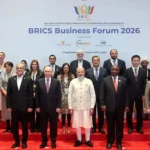
BRICS’ renewed push for economic cooperation at its 18th Summit in New Delhi offers an important opportunity to reshape global economic governance and strengthen the voice of emerging economies. However, the bloc’s growing influence will depend not merely on its combined population, economic weight or political rhetoric, but on its ability to translate diversity into meaningful collective action.
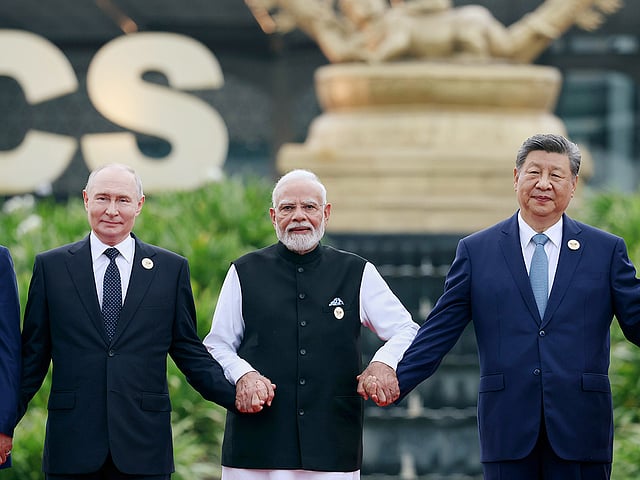
The appeal by Chinese President Xi Jinping, Russian President Vladimir Putin and Indian Prime Minister Narendra Modi for deeper cooperation comes at a time when trade tensions, energy insecurity and divisions in the international system are placing developing economies under increasing pressure. A more inclusive global order is a legitimate aspiration, but it must be supported by practical policies that expand trade, investment, infrastructure and development financing.
BRICS’ diversity remains both its greatest strength and its most significant challenge. Its members have different political systems, economic interests and strategic alliances. The unresolved tensions between China and India, disagreements over international conflicts and divergent approaches to global security demonstrate how difficult it may be to achieve consensus on sensitive issues.
Nevertheless, economic cooperation does not require complete political agreement. The bloc can make meaningful progress by concentrating on shared priorities, including local-currency trade, financial stability, energy security, food production, technology and infrastructure development. Such initiatives could reduce vulnerabilities and create new opportunities for developing economies.
The renewed engagement between Beijing and New Delhi is particularly significant. Improved relations between the two Asian powers could strengthen BRICS’ economic foundation, provided their territorial and strategic disagreements do not undermine cooperation. Dialogue, mutual respect and practical confidence-building measures should remain central to that process.
BRICS must also ensure that its ambition to challenge Western-dominated institutions does not become an exercise in replacing one form of dominance with another. A genuinely inclusive global order should promote fairness, transparency, accountability and equal opportunity for all developing countries, including smaller economies within and outside the bloc.
Ultimately, BRICS’ success will be measured by what it delivers rather than what it declares. If its members can manage their rivalries, expand economic partnerships and provide credible alternatives in development financing and global trade, the bloc could become a more effective force for international reform. If geopolitical competition continues to overshadow practical cooperation, its promise of a more balanced world order may remain largely rhetorical.