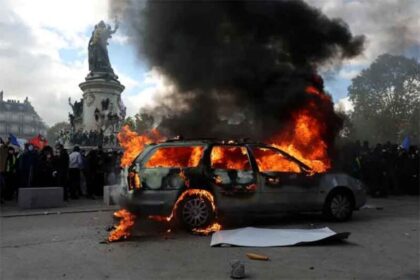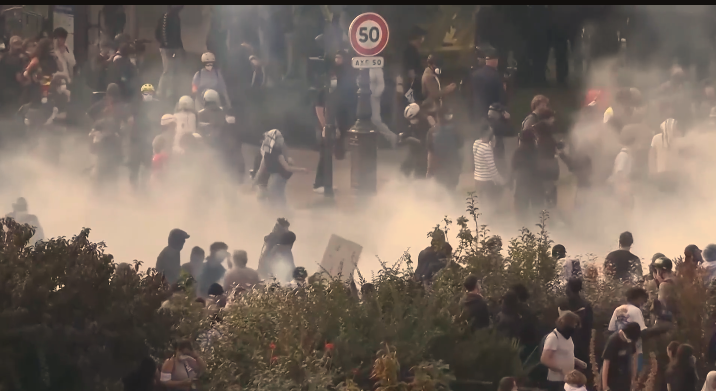
PARIS — Demonstrations swept across France on Tuesday as students, teachers and parents took to the streets over worsening conditions in the country’s schools, with clashes between protesters and security forces leaving hundreds injured and prompting a heavy police response.
The protests expose a failure that should have been addressed long before young people were driven onto the streets: students are demanding basic conditions that any responsible education system ought to guarantee. Adequate teachers, properly maintained classrooms, reasonable school hours, sufficient lunch breaks and safe learning environments are not privileges; they are fundamental requirements for effective education. Had the authorities acted earlier and meaningfully, there would have been little justification for a protest movement to reach such a dangerous level.
Prime Minister Sébastien Lecornu described the demonstrations as the most violent student unrest in decades. Police used tear gas and water cannons to disperse violent groups in Paris, Strasbourg, Rennes, Toulouse and other cities.
The Interior Ministry said more than 250,000 people took part in demonstrations across dozens of cities, while organisers put the figure at about 450,000. The ministry also reported 488 arrests and 48 injured security personnel.
Lecornu said at least 215 teenagers and 85 school staff had been injured in the clashes, describing the toll as the heaviest suffered by the school system in decades. His office said more than 700 police officers had also been injured.
The protests, which began in deprived suburbs of Paris in September, have spread nationwide, with students complaining about overcrowded classrooms, teacher shortages and deteriorating school facilities, including leaking water systems and rat infestations.
The High School Students Union said more than half of France’s high schools had either been blockaded or closed for the day, while some education authorities moved classes online.
In Marseille and Nantes, protesters carried placards accusing the state of abandoning national education, while parents in Toulouse joined students in demonstrations. In Paris, clashes involved about 300 people, according to police though most of the wider demonstration passed without major incident.
Rights groups, students and parents have accused the authorities of using disproportionate force against minors. The government, however, says the movement has been infiltrated by outsiders and that some demonstrations have degenerated into urban violence.
More than 1,800 people are being prosecuted for alleged offences connected to the unrest, including 1,483 minors, according to the Justice Ministry.
The government has now promised action. Lecornu has ordered ministers to address demands including the replacement of absent teachers, a review of the 8 a.m. to 6 p.m. school schedule, longer lunch breaks and repairs to ageing school buildings. Ministers are expected to submit initial proposals by the end of October.
But promises made after violence has erupted cannot substitute for responsible governance. The French authorities had ample opportunity to recognise the deterioration in the education system and respond before frustration boiled over. Young people should not have to blockade schools, confront riot police or see their peers injured before government officials acknowledge that leaking classrooms, overcrowding, inadequate staffing and poor facilities are serious national problems.
At the same time, legitimate grievances cannot justify attacks, destruction of property or violence against police and other people. Students have every right to demand a better education, but those demands are strongest when pursued peacefully and responsibly. The authorities, for their part, must understand that suppressing anger without fixing the conditions that produced it will only postpone the next crisis.
The protests have also intensified pressure on President Emmanuel Macron’s government, already struggling with weak economic growth, rising public debt and political difficulties following the loss of its parliamentary majority in 2024.
Finding the money to fulfil the students’ demands will be difficult as France seeks to contain its widening budget deficit. The yield on French 10-year bonds briefly rose above 5% last week, its highest level in 24 years, reflecting growing investor concern over the country’s debt and spending.
Yet education cannot be treated merely as another expenditure to be trimmed whenever public finances become difficult. If France wants a productive, stable and competitive future, investment in its young people must be regarded as a national priority.
The immediate task is therefore clear: end the violence, protect students and staff, and address the long-standing failures in the school system before another generation pays the price for governmental inaction.
But France must also examine how it reached this point. In a country regarded as advanced, student boycotts, strikes and industrial action should not become the first or most effective means of forcing government to attend to vital national interests. Such disruptions carry serious costs for families, businesses and the wider economy, and they are especially troubling when they arise from failures that public institutions had the resources and responsibility to prevent.
The deeper question is not only why schools were allowed to deteriorate, but how public money was allocated, supervised and managed. Misappropriation, waste and poor financial management can weaken education while also damaging healthcare, transport, housing, public safety and other essential services. When funds intended for classrooms, hospitals or infrastructure are diverted, squandered or administered without accountability, citizens are left to bear the consequences through declining services and higher taxes.
France should therefore investigate whether budgetary pressures alone explain the crisis or whether years of misplaced priorities, administrative inefficiency and inadequate oversight contributed to it. The lesson extends beyond education: no advanced country can sustain public confidence when government spending is opaque, institutions are poorly managed and officials respond only after public anger becomes impossible to ignore.
Responsible governance requires transparent budgeting, independent audits, consequences for misuse of public funds and early intervention when essential services begin to fail. Protest may draw attention to injustice, but it cannot replace competent administration. France’s schools, hospitals, transport networks and other public institutions deserve investment, discipline and accountability long before frustration turns into confrontation.