London-listed miner expands West African footprint as Ghana exploration raises prospects for new lithium supply
Kodal Minerals is accelerating its expansion across West Africa, securing an entry point into Ghana’s emerging lithium industry as improving market conditions and rising demand for critical minerals revive investor interest in new mining projects.
The London-listed mining company has acquired an initial 10 per cent stake in Ghana’s Asamankese Lithium Project for US$300,000, with an option to increase its interest to 80 per cent through a staged investment programme over five years. The move extends the company’s regional growth strategy beyond its producing Bougouni lithium mine in Mali, positioning it to capitalise on the growing demand for minerals used in electric vehicles, energy storage systems and consumer electronics.
For Kodal, the Asamankese agreement represents an opportunity to build on its Malian production experience while securing a foothold in Ghana’s lithium sector.
Kodal announced the agreement earlier this week following a binding arrangement with GH Geo-Consult Limited, a Ghanaian company holding interests in the project. The agreement provides a framework for the development of the Asamankese asset, subject to exploration results and the completion of successive investment stages.
Located in Ghana’s Eastern Region, approximately 75 kilometres by road from Accra, the project covers 156 square kilometres and offers Kodal an opportunity to establish a stronger presence in another West African lithium-producing jurisdiction.
Under the agreement, Kodal can increase its ownership to 30 per cent after completing the first exploration stage, 60 per cent following a second stage targeting an initial mineral resource estimate, and 80 per cent after a third stage aimed at completing a definitive feasibility study. GH Geo-Consult will retain the remaining 20 per cent.
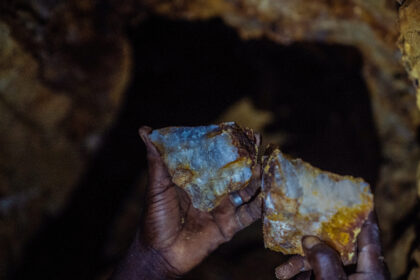
Early exploration results have identified encouraging lithium mineralisation at two priority prospects, Amantra and Nfranta. Historical rock-chip samples returned lithium oxide grades of up to 3.02 per cent, while sampling conducted by Kodal recorded grades reaching 2.49 per cent.
Although the results provide an initial indication of the project’s mineral potential, further exploration and drilling will be required to establish the extent, continuity and commercial viability of the deposits.
Kodal said field exploration was already underway, with a local drilling contractor appointed and initial diamond drilling expected to commence before the end of 2026. The results will help determine the project’s next development phase and inform decisions on further capital commitments.
Chief Executive Officer Bernard Aylward said the company’s expansion strategy was deliberately concentrated on West Africa, where it had accumulated between 15 and 18 years of operational experience.
According to Aylward, the company’s familiarity with regional legislation, community engagement and government relations provides an advantage as it pursues opportunities across the region.
He also expressed confidence in West Africa’s geological potential, arguing that Kodal’s established regional knowledge could support the identification and development of additional mineral resources.
The Asamankese acquisition builds on the company’s experience at the Bougouni lithium mine in Mali, which entered production in 2025 and is operated through a joint venture with China’s Hainan Mining. Kodal also holds gold exploration assets in Mali and Côte d’Ivoire, reflecting its broader interest in the region’s mineral resources.
Aylward said the early exploration results from Asamankese showed similarities to the initial stages of development at Bougouni. However, he stressed that the Ghanaian project would be evaluated on its own geological characteristics rather than assuming that it would replicate the Malian operation’s development path.
The company intends to finance exploration at Asamankese through its existing cash resources and cash flow from its producing mine, rather than seeking additional equity funding, Aylward told Reuters.
The strategy could allow Kodal to advance its Ghanaian interests while limiting the need to raise fresh capital, although the scale and timing of future expenditure will depend on exploration outcomes and the project’s progression towards feasibility.
Kodal’s expansion comes as a recovery in lithium prices improves the outlook for new mining investments following a prolonged market downturn that forced companies across the sector to delay or reassess projects.
In Ghana, the slowdown affected development prospects for the country’s flagship Ewoyaa lithium project, highlighting the challenges facing emerging producers as they navigate commodity-price volatility, financing requirements and the substantial capital needed to bring new mines into operation.
The improving price environment could strengthen the investment case for projects capable of delivering commercially viable lithium supplies. Nevertheless, the extent to which Asamankese benefits will depend on the quality of its mineral resources, development costs, financing requirements and prevailing market conditions.
Aylward said the long-term demand outlook remained favourable, pointing to the continued need for lithium in electric vehicle batteries, energy storage systems and consumer electronics.
He expressed confidence that additional supply brought to the market would attract commercial rewards, provided projects could meet the industry’s technical and economic requirements..