The family of Democratic Republic of Congo (DRC) President Félix Tshisekedi is facing mounting financial scrutiny following a series of allegations involving the country’s mineral wealth, public treasury and a controversial $17.6 million transfer to a United States-based defence company.
The allegations, which have triggered investigations and legal disputes in Belgium and the United States, centre on suspected irregularities in mining contracts, multimillion-dollar payments to members of the presidential family and questions surrounding government transactions.
Although the allegations remain unproven and those implicated have denied wrongdoing, their growing number is putting the Congolese president under pressure, particularly as he has consistently portrayed the fight against corruption as a major priority of his administration.
The controversy has also raised questions about the relationship between political power, access to public resources and the management of the country’s vast mineral wealth.
Tshisekedi, however, has dismissed the developments as a political conspiracy but with several questions still unanswered, the financial controversies are increasingly threatening his administration’s anti-corruption credentials.
In early November, while addressing the Congolese diaspora in Moscow, the president challenged Belgian investigators to disclose what they had discovered during searches conducted at properties belonging to people close to him.
“I am still waiting,” he declared, demanding an inventory of the materials seized during the operation.
Bernard Maingain, the lawyer representing the complainants behind the Belgian investigation, has equally demanded transparency though for different reasons he wants the First Lady, the president’s brothers-in-law and his children to explain themselves and has called for the publication of the list of seized assets.
Belgium’s federal prosecutor, however, has maintained silence, citing the confidentiality of the investigation and the presumption of innocence.
The investigation became public after several dozen Belgian investigators raided properties in Brussels and the Flemish and Walloon Brabant regions on October 14, 2026.
The federal prosecutor confirmed that the operation was part of a judicial investigation into suspected money laundering following complaints filed by non-governmental organisations in July 2025.
Although the authorities declined to disclose the identities of those involved, Belgian newspaper La Libre Belgique reported that some of the properties searched, particularly in Waterloo and Leuven, belonged to members of the Congolese presidential family.
According to the newspaper, investigators removed boxes of documents and seized several vehicles during the operation.
At the centre of the investigation is an 80-page complaint submitted on July 8, 2025, to Federal Prosecutor Ann Fransen by lawyers Bernard and Brieuc Maingain, alongside Congolese lawyer Hervé Diakiese.
They are representing non-governmental organisations and trade unions from Haut-Katanga and Lualaba, with four former directors of the state-owned mining company, Gécamines, also joining the complaint.
The document accuses nine individuals of alleged involvement in corruption, embezzlement and money laundering. Although the judiciary has not officially disclosed their identities, Africa Intelligence and Afrique XXI, which claim to have examined the case file, have identified several members of the president’s family.
Those reportedly named include First Lady Denise Nyakeru, three of the president’s brothers — Christian, Jacques and Jean-Claude — and two of his children, Fanny and Anthony. Belgian media have also mentioned a sister-in-law and some cousins.
All the individuals reportedly hold Belgian citizenship, a factor that could allow Belgian courts to investigate alleged offences committed outside the country under certain legal conditions. Tshisekedi himself is not among those named, having immunity attached to his presidential office. Being mentioned in a complaint, however, does not amount to being formally charged.
The complainants say they approached Belgian authorities because they believe the Congolese judicial system cannot independently investigate allegations involving powerful political figures, while ome witnesses reportedly travelled to Belgium through indirect routes because they feared they might be prevented from returning home.
One of the prominent witnesses, trade unionist Jean-Pierre Muteba, has reportedly been questioned several times by Belgian investigators and is now living in exile.
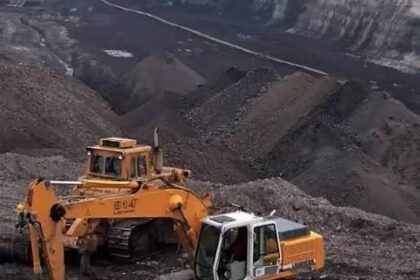
Beyond the political connections, the most significant allegations concern the exploitation of mining waste dumps, locally known as remblais, which are enormous deposits of mining residues that still contain valuable quantities of copper and cobalt.
According to the complainants, these deposits, located on concessions belonging to state-owned companies such as Gécamines and Sodimico, have allegedly been awarded to private operators, including Chinese and Lebanese businesses, some of which are reportedly linked to members of the presidential family.
Muteba maintains that the mining waste is being sold for only a fraction of its actual value, alleging that some of the sites are guarded by the Republican Guard, which operates under the authority of the president.
The organisations behind the complaint estimate that about 15 mining sites are involved and allege that tens of millions of dollars are being diverted every month.
Afrique XXI cited a particular contract between Sodimico and MY2K Mining involving the removal and transportation to Zambia of approximately six million tonnes of mining waste from the Lonshi mine.
The complainants attribute ownership of MY2K Mining to Kali Kalala Tshisekedi, whom they describe as either a half-brother or cousin of the president.
Maingain has also alleged that commissions are collected through subcontracting arrangements and that certain individuals exercise influence over customs operations, comparing the alleged practices to mafia-style activities.
These claims, including the financial estimates and alleged ownership connections, remain allegations and have not been established by a court. Nevertheless, Belgian investigators are examining possible financial transactions connected to the individuals named in the complaint.
According to La Libre Belgique, the Belgian prosecutor’s office requested banking records relating to several individuals in November 2025, with investigators examining transactions covering the period from January 2018 to January 2025.
The complainants allege that proceeds from mining activities were used to finance lifestyles inconsistent with the declared incomes of those involved.
The investigation has also created an uncomfortable situation for Tshisekedi, who established a specialised Economic and Financial Criminal Court on March 14, 2026, through an ordinance-law, with a section dedicated to mining-related offences.
Yet, months after that initiative, allegations involving the country’s mining resources are being investigated by a Belgian judge at the request of Congolese citizens who say they cannot obtain justice at home.
The country’s corruption record further complicates the situation. The DRC scored just 20 points out of 100 in Transparency International’s 2025 Corruption Perceptions Index, underscoring the scale of the governance challenges confronting the country.
While the Belgian investigation was unfolding, another controversy emerged in late October over payments made by the Congolese Treasury to Marthe Kasalu Jibikila, the president’s mother.
Africa Intelligence reported that the government had paid her several million dollars as exit benefits allegedly owed to her late husband, Étienne Tshisekedi, a former prime minister who died in 2017.
The publication also raised questions about public funding reportedly allocated to foundations associated with the presidential family, including the Étienne Tshisekedi Foundation and the Kasalu Foundation.
The report followed an earlier investigation by the same publication, which put the cost of presidential missions and travel at no less than $122.3 million in 2025, citing documents said to have originated from the Central Bank of Congo.
However, the central bank issued a statement on October 21 denying that it had produced or published any report containing those figures but did not provide alternative expenditure figures.
At this stage, there is no established evidence that the payments to the president’s mother or the foundations were illegal. Nevertheless, the absence of publicly available documents explaining the legal basis, calculations and conditions governing the payments has fuelled demands for greater transparency.
A third controversy has emerged in the United States over a $17.6 million transfer to Texas Armament & Technology, a Houston-based defence company.
The transaction surfaced amid allegations by Alina Habba, a former lawyer to US President Donald Trump, against Richard Grenell, former president of the Kennedy Center.
Habba accused Grenell of arranging for the money to be transferred to the Texas company through her husband, Turkish businessman Turhan Mildon.
She alleged that approximately $5.6 million intended for the Kennedy Center never reached the institution. Grenell has denied wrongdoing.
An internal White House investigation subsequently identified the Congolese Ministry of Finance as the source of the payment. A US official quoted by Axios said the transfer was made in May 2025.
The New York Times reported that the money came from an account linked to the Kinshasa government and could have been connected to a software contract intended for the DRC.
The newspaper also reported that Mildon had secured public contracts worth more than $500 million in the DRC, several of which were reportedly experiencing delays.
Although the allegations against Grenell do not establish that the Congolese transfer was improper, they have raised questions about who authorised the payment and what services the government received in return. Congolese authorities have yet to respond to enquiries from American media organisations.
Civil society organisations have subsequently petitioned the US Department of Justice, the FBI and the Financial Crimes Enforcement Network, demanding an investigation into the transaction.
The Texas transfer is not the only American legal controversy involving Congolese officials.
In a separate civil action filed in early January 2026 before a federal court in Idaho, PayServices accused several Congolese officials of demanding bribes in connection with a proposed project to digitise public payments.
The complaint named the ministers of State Assets and Finance, as well as presidential chief of staff Anthony Nkinzo Kamole, while maintaining that Tshisekedi himself was unaware of the alleged arrangement. The company is seeking approximately $4 billion in damages.
The Ministry of State Assets has rejected the allegations, describing PayServices as a fraudulent company that allegedly misrepresented its banking status, and insisting that no public funds were committed to the project. The lawsuit remains separate from the Belgian investigation and the Texas transfer.
Faced with the growing controversies, members of the presidential camp have increasingly portrayed the allegations as politically motivated.
Denise Nyakeru, through her lawyers, has rejected the accusations against her and pledged to cooperate with Belgian investigators.
Jacques Tshisekedi had earlier described the allegations as “false, baseless and defamatory”, claiming that mining operators had improperly used the family name.
On October 20, interim UDPS president Augustin Kabuya also insisted that the president’s relatives “have stolen nothing”, linking the controversy to the wider debate over constitutional revision.
Government spokesperson Patrick Muyaya questioned the credibility of one of the organisations behind the complaint, describing it as fictitious, while accusing one of the lawyers of being pro-Rwandan.
During his Moscow visit, Tshisekedi similarly linked the allegations to Rwanda’s Paul Kagame and former Congolese president Joseph Kabila while also accusing political opponents Moïse Katumbi and Kabila of building their wealth at the expense of the Congolese people.
However, neither the presidency nor the government has provided substantive answers to questions concerning the mining contracts, banking transactions and public payments at the heart of the controversies.
The political response has also generated diplomatic tension. On October 15, Anthony Nkinzo Kamole issued a circular prohibiting presidential staff from having contact with the Belgian Embassy. He is also named in the separate PayServices lawsuit.
Subsequently, UDPS official Fils Mukoko threatened in a video to arm the population and organise a protest outside the Belgian diplomatic mission. The party distanced itself from his remarks, while Muyaya condemned the threats.
Belgium’s Foreign Affairs Minister, Maxime Prévot, later assured lawmakers that his country’s judiciary was completely independent of executive influence.
The latest allegations have revived memories of an earlier controversy involving Vidiye Tshimanga, Tshisekedi’s former strategic adviser.
In September 2022, Tshimanga resigned after Le Temps and the Organised Crime and Corruption Reporting Project published videos in which he appeared to offer fictitious mining investors access to opportunities through his proximity to the president.
He was prosecuted in Kinshasa for corruption, influence peddling and insulting the head of state but was subsequently acquitted, according to a statement by his lawyer on December 23, 2022.
In the current Belgian investigation, no formal charges have been publicly announced. Lawyer Hervé Diakiese told Radio Okapi that the proceedings should not be interpreted as establishing anyone’s guilt.
The complainants’ legal representatives have warned that the investigation could take considerable time, particularly because of the alleged use of intermediaries to conceal ownership and financial transactions.
Reports circulating on social media about cash allegedly recovered during the Belgian searches have also not received official confirmation.
Nevertheless, the controversy carries significant political implications for Tshisekedi, whose second five-year term began on January 20, 2024.
The president has not ruled out seeking a third term, an ambition that would require a constitutional amendment ahead of the presidential election expected in late 2028.
Any attempt to change the constitutional framework could become more politically contentious if questions about accountability and the management of public resources remain unresolved.