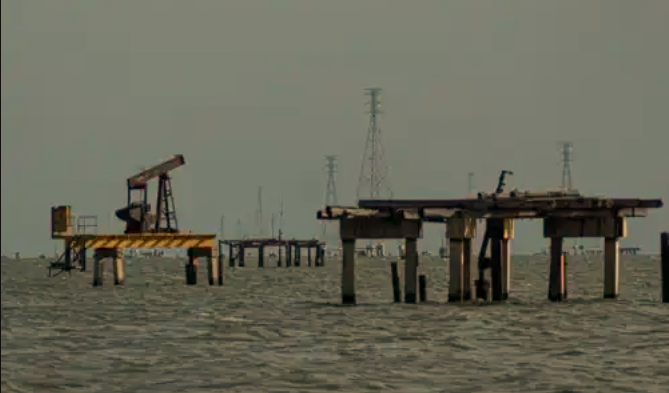
Venezuela’s oil production has climbed to 1.23 million barrels per day, its highest level since February 2019, as easing U.S. sanctions and reforms opening the sector to private investment fuel renewed activity.
Acting President Delcy Rodríguez announced the increase in a televised address, saying output has risen 29.8% since the start of the year. She said the government has also signed 50 strategic oil and gas agreements expected to attract new investment across more than 76 hydrocarbon-producing areas.
The surge follows a sweeping overhaul of Venezuela’s oil law, approved by the National Assembly after the capture of former President Nicolás Maduro in January. The reforms ended the state’s monopoly over the sector, allowing private companies to take greater operational control and directly market production under a new tax framework that includes international arbitration.
Rodríguez said the economy had continued to expand despite severe damage to the country’s energy infrastructure, including refineries affected by major earthquakes in June. She said Venezuela has recorded 21 consecutive quarters of economic growth and cited a 6.5% GDP growth forecast for 2026 from the U.N. Economic Commission for Latin America and the Caribbean.
“Much remains to be done” to restore an economy severely affected by sanctions, Rodríguez said, despite the recent gains.
Venezuela’s Oil Ministry and state-owned PDVSA are targeting production of 1.37 million barrels per day by the end of the year. Reaching that goal will require substantial investment to repair ageing fields, pipelines, refineries and other infrastructure.
Despite the recovery, current output remains far below Venezuela’s production levels of a decade ago, when the country pumped about 2.1 million barrels per day. It is also roughly one-third of the country’s historic peak of 3.5 million barrels per day recorded in 1998.
The latest figures nonetheless mark a significant turnaround for Venezuela’s battered oil industry, with the government seeking to use foreign investment and private-sector participation to accelerate the recovery of one of the world’s largest oil reserves.