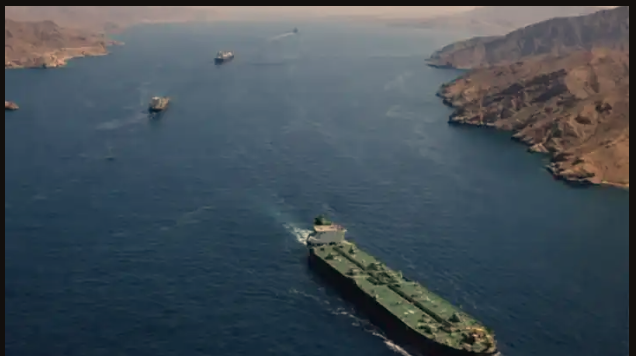
Iran has ruled out reopening the strategically important Strait of Hormuz until the United States fulfils seven conditions agreed under an interim memorandum of understanding between the two countries, escalating tensions between Tehran and Washington.
Speaker of the Iranian Parliament and the country’s top negotiator, Mohammad Baqer Qalibaf, disclosed this on Sunday, saying Tehran had proposed at the recently concluded 81st United Nations General Assembly that the waterway could be reopened and normal maritime traffic restored within seven days if Washington met the conditions.
Qalibaf said the United States responded to the proposal last week through Qatari intermediaries, but stressed that Iran’s position remained unchanged.
“The position of the Islamic Republic of Iran is completely clear and firm, and the Strait of Hormuz will not be opened until our seven conditions, based on the Islamabad memorandum of understanding, are met,” Iranian state media quoted him as saying.
He added that Washington must recognise that “the period of dragging out the diplomatic process and dictating one-sided demands is over.”
The development came as Iran ruled out entering into negotiations with the United States over its nuclear programme, despite ongoing diplomatic efforts to end the conflict and restore security around the vital waterway.
Iranian Foreign Ministry spokesman, Esmaeil Baghaei, said Tehran had conveyed its broad response to the latest American proposal through mediators, although further details were still being communicated to Washington.
Baghaei said the US proposals were largely consistent with its previous demands, particularly concerning Iran’s nuclear activities.
“The Americans’ propositions are more or less in line with their previous positions, specifically on the nuclear issue,” he said, adding that Iran had made clear that its immediate priority was the Strait of Hormuz.
“We told them our focus at this stage is the issue of the Strait of Hormuz, and the return to security in this waterway requires clear steps from the US.”
Baghaei also dismissed reports that Tehran had offered to permit inspections of its nuclear facilities by the United Nations nuclear watchdog in return for sanctions relief.
He insisted that Iran had not entered into negotiations with Washington on the nuclear issue.
An official familiar with the discussions said the proposal included a seven-day confidence-building period designed to revive an enhanced version of the June memorandum of understanding.
According to the official, the plan contains specific measures relating to Iran’s nuclear programme, with the major disagreement between the two sides reportedly centred on the sequence for implementing the measures rather than their substance.
Qatar has been mediating between Washington and Tehran as diplomatic efforts intensify to end the conflict and secure the reopening of the Strait of Hormuz.
The strategic waterway links the Persian Gulf with the Gulf of Oman and, before the war began in late February following US and Israeli attacks on Iran, carried roughly one-fifth of global oil and liquefied natural gas supplies.
The June memorandum had led to a brief ceasefire and contained provisions concerning both the Strait of Hormuz and Iran’s nuclear programme.
Meanwhile, Iranian Foreign Minister Abbas Araqchi urged Washington to choose diplomacy, warning that Tehran was prepared to respond if the United States returned to military action.
“If they again move towards military solutions, we are more prepared than before and will take whatever action is necessary to defend ourselves,” Araqchi told foreign ambassadors and diplomats in Tehran on Sunday.
The warning followed reports that Iran was preparing a broader and stronger response should Washington resume large-scale military attacks, underscoring the fragile nature of the diplomatic efforts and the potential consequences for global energy supplies.