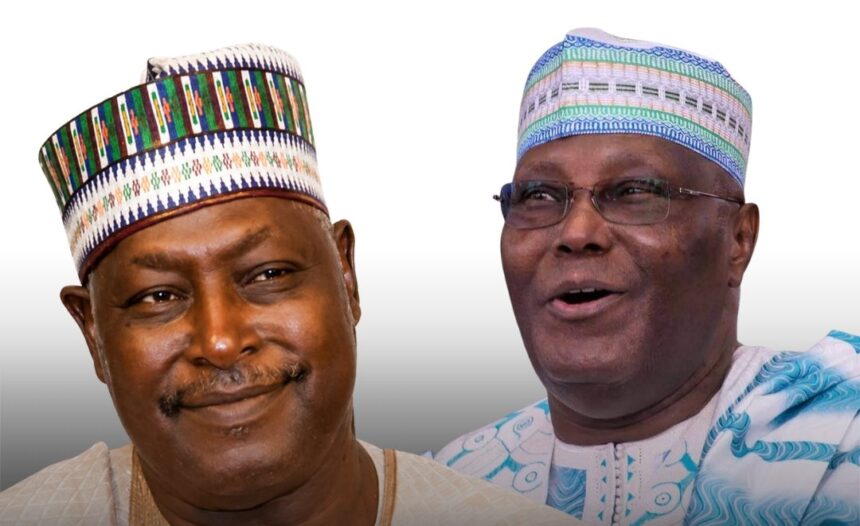
Former Secretary to the Government of the Federation, Babachir Lawal, says he would rather support President Bola Tinubu than former Vice President Atiku Abubakar in the 2027 presidential election.
Lawal spoke during a revealing interview on the Naija Unfiltered Podcast. He warned that an Atiku presidency could end in a chaotic crash for the country.
“I’d rather go with Bola than Atiku because when Nigeria crashes with Bola, it might be an orderly crash, but with Atiku it would be a chaotic one,” Lawal said.
Asked to explain his view, he replied: “Because he’s not a good man.”
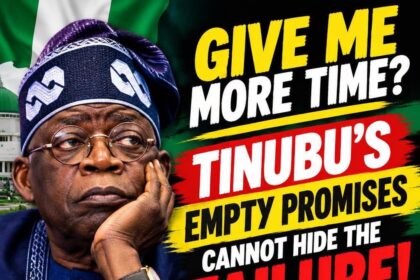
Tinubu took office in May 2023. His reforms ended the fuel subsidy and unified the exchange rate. Prices surged. Supporters credit him with bold calls. Critics say the pain outweighs the gain. Lawal’s “orderly crash” remark refers to that debate.
Lawal served as Secretary to the Government of the Federation under President Muhammadu Buhari from 2015 to 2017. Buhari suspended him and later removed him over allegations of contract fraud linked to displaced persons camps in the North-East. Lawal has remained vocal in national politics since his exit. His remarks will shape the 2027 contest.
Lawal said he once considered working for Atiku. He cited the suffering in northern Nigeria and felt the region should not surrender the presidency. He believed a northern president would at least halt the decline.
The North faces rising insecurity and economic strain. Bandit attacks have displaced farming communities across the North-West. Food prices have climbed. Many northern leaders say the region needs stronger representation at the centre. Lawal shared that view before his fallout with Atiku.
His experience working with Atiku changed his mind. He alleged that Atiku often gave instructions and later reversed them after consulting other people.
“Everything you do with him, there’s chaos,” Lawal said.
He claimed decisions reached with Atiku were sometimes altered after others intervened. He cited disagreements over political appointments as one source of the confusion.
Atiku served as vice president from 1999 to 2007 under President Olusegun Obasanjo. He has sought the presidency for three decades. He flew the Peoples Democratic Party flag in 2019 and 2023. He lost both races. He now leads the opposition charge under the African Democratic Congress ahead of 2027.
Lawal also disclosed that Atiku asked him to persuade former Anambra State Governor Peter Obi to accept a running mate slot ahead of 2027. He said Atiku proposed serving one term. Atiku also proposed a constitutional amendment to make the presidency a single six-year term. Rotation would then begin with the South-East and North-Central zones.
Lawal said he approached Obi because of their relationship. Obi declined. Lawal quoted Obi as saying his survey showed the pair were unlikely to win.
He said Obi indicated he would rather not contest than join a ticket he believed would lose. Lawal said he conveyed Obi’s position to Atiku. He also consulted prominent Igbo figures to persuade Obi. The effort failed.
Obi ran for president in 2023 on the Labour Party ticket. He drew strong support from young voters and urban centres. His campaign reshaped the race into a three-way contest. He has kept his 2027 plans close. His refusal to deputise for Atiku signals he may run on his own again or sit out a joint ticket.
Lawal recently joined the Nigeria Democratic Congress after resigning from the African Democratic Congress. His resignation followed Atiku’s emergence as the ADC presidential candidate.
The ADC has become the main platform for opposition figures plotting against Tinubu. Nasir El-Rufai and Rotimi Amaechi have aligned with the movement. Talks of a united ticket continue. Lawal’s exit shows the cracks in that alliance.
Political watchers say Lawal’s comments could hurt Atiku’s outreach in the North. The region holds the largest voting bloc. A divided opposition also boosts Tinubu’s re-election odds. The coming months will test whether the ADC can hold its big names together.
Atiku’s camp has yet to respond publicly. Obi’s team has also kept silent. Analysts expect these exchanges to shape the opposition’s next moves.
His comments come amid fresh talks among opposition figures over possible new alliances ahead of the 2027 election.