The economic confrontation between the United States and Iran has entered a potentially decisive phase, with US Treasury Secretary Scott Bessent warning that Tehran could have “nothing left to trade” within two weeks as Washington tightens pressure on its oil exports. The warning, if borne out, could significantly reshape the bargaining position of both sides as diplomatic efforts remain uncertain.
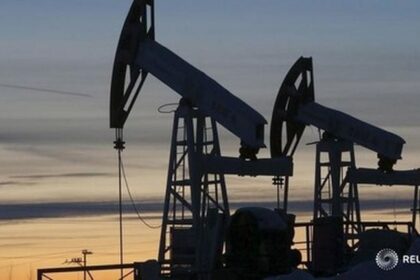
Bessent said on Sunday that only about 15 million barrels of Iranian crude remained out for delivery, most of it destined for China. He said Iran was expected to complete those deliveries within two weeks, after which Tehran’s ability to use oil exports as an economic lifeline would be severely constrained.
“They will have nothing to trade for anything, probably within the next two weeks. They are going to make their final deliveries of oil to China, and then they will have nothing,” Bessent said, according to Fox News.
The Treasury Secretary attributed the situation to the Trump administration’s campaign, known as Operation Economic Outcast, which is aimed at cutting Iran off from international trade and exerting economic pressure on Tehran.
Bessent said the campaign was already having an effect, arguing that Iran was “feeling the pressure” and that the economic difficulties had contributed to renewed Iranian interest in reaching an agreement with Washington.
His assessment, however, remains a prediction by a senior American official rather than an independently established deadline for the collapse of Iran’s foreign trade. Iran has other economic relationships and sources of revenue, meaning the consequences of reduced oil exports could be more complicated than Washington’s assessment suggests.
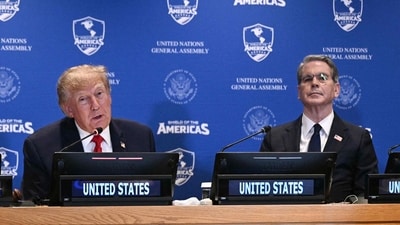
The latest development comes amid conflicting signals over possible negotiations. While President Donald Trump has said he expects discussions with Iran to continue, Tehran has indicated that its delegation at the United Nations General Assembly has no plans for direct negotiations with the United States.
Iranian state media, citing a source close to the Iranian delegation, reported that Tehran’s representatives in New York had no plans for talks with Washington and had already conveyed Iran’s position through Qatar.
The apparent contradiction between Washington’s expectation of further negotiations and Tehran’s reported position highlights the deep mistrust surrounding the diplomatic process. Both sides appear to be seeking leverage before committing themselves to a new agreement.
Trump recently rejected Iran’s latest proposal, saying Tehran had “overplayed its hand”. He nevertheless indicated that further discussions could take place during the week, suggesting that the diplomatic channel has not been completely closed.
At the centre of the dispute is the Strait of Hormuz, one of the world’s most important energy corridors. Iran has linked the reopening of the waterway to conditions for ending the conflict, while Washington maintains that the waterway remains sufficiently open for oil shipments.
Bessent said oil flows were currently averaging between 15 million and 22 million barrels a day, compared with approximately 20 million barrels a day before the conflict. He presented the figures as evidence that the disruption had not stopped global oil supplies from reaching international markets.
For Iran, however, the issue extends beyond the immediate flow of crude. Restrictions on its oil exports threaten one of its most important sources of foreign currency and could increase pressure on an economy already facing the consequences of sanctions and international isolation.
Tehran has reportedly presented seven conditions for ending the conflict and reopening the Strait of Hormuz. Among them are a seven-day ceasefire across the region, including Lebanon, the unfreezing of Iranian assets, the lifting of sanctions on Iran’s oil sector and an end to the US naval blockade.
Washington, meanwhile, appears focused on using economic pressure to secure broader concessions from Tehran. Bessent said the purpose of the campaign was not merely to deprive Iran of oil revenue but to ensure that any future agreement would be honoured.
The Treasury Secretary accused Iran of failing to comply with a previous memorandum of understanding and argued that any new agreement would need mechanisms capable of ensuring Iranian compliance.
The confrontation also carries consequences beyond the two countries. Any prolonged disruption involving the Strait of Hormuz could affect international energy markets, shipping costs and the economies of countries dependent on Middle Eastern oil and gas supplies.
China is particularly significant in the current dispute because it remains the destination for Iran’s remaining oil shipments cited by Bessent. The extent to which Beijing continues purchasing Iranian crude could therefore become an important factor in determining whether Washington’s pressure campaign achieves its intended effect.
The coming weeks may consequently become a test of whether economic pressure can produce diplomatic concessions or instead deepen the confrontation. Bessent’s two-week warning has raised the stakes, but Tehran’s response and the willingness of both sides to return to negotiations will ultimately determine whether the pressure leads to a settlement or another escalation.
For now, it is not simply about Iran selling sell its remaining oil, but whether Washington’s strategy of economic isolation can translate into a durable diplomatic agreement. The answer may depend less on how quickly Iran’s oil lifeline diminishes than on what both sides are prepared to concede once economic pressure and diplomatic necessity meet at the negotiating table.