Nigeria’s weak regional leadership and President Tinubu’s alignment with French interests have helped fracture ECOWAS.
Former Nigerian President Olusegun Obasanjo has directly blamed the handling of the 2023 Niger coup by the Economic Community of West African States (ECOWAS) under President Bola Tinubu for the departure of three Sahelian nations from the regional body, arguing that a combination of weak Nigerian leadership and an appearance of subservience to French interests fractured the 15-member bloc.
Speaking during an interview at the Harvard Kennedy School’s Institute of Politics, Obasanjo said ECOWAS had managed to remain intact until the Niger crisis, when the organisation’s reaction and Nigeria’s role as regional leader triggered a rebellion by Mali, Burkina Faso and Niger. “The way ECOWAS as an organisation handled it, and Nigeria as the leader in ECOWAS reacted, made three of the members of ECOWAS, Mali, Burkina Faso and Niger Republic, rebel,” he said, describing the split as “a bit of a sort of rebellion” that led the three states to declare themselves the Alliance of the Sahel.
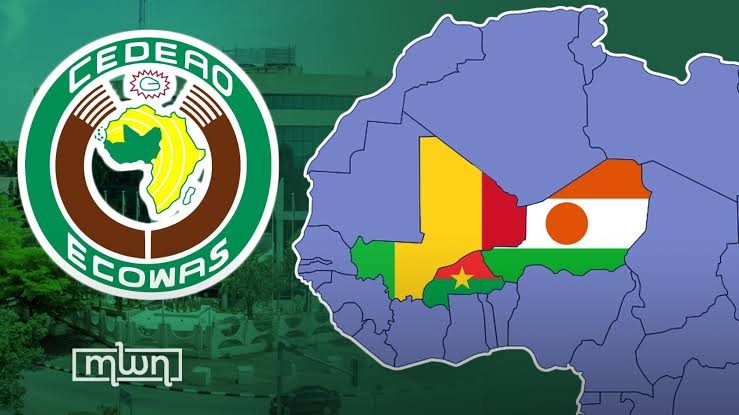
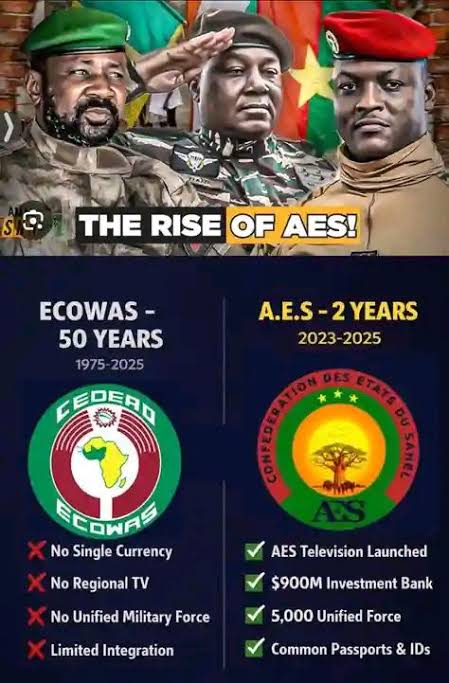
The sequence of events Obasanjo criticised is well documented. Following the July 2023 coup that removed Nigerien President Mohamed Bazoum from power, ECOWAS, then led by President Bola Tinubu, responded with sweeping sanctions, a one-week ultimatum for the restoration of constitutional order, and the activation of its standby force amid threats of military intervention. The hardline approach immediately provoked a backlash: Mali and Burkina Faso, both under military rule, warned that any attack on Niger would be treated as an attack on their own sovereignty and pledged to defend the junta. By September 2023, the three countries had formalised a mutual-defence pact, the Alliance of Sahel States (AES), and in January 2024 they announced their withdrawal from ECOWAS, accusing the bloc of unfair treatment, foreign influence and a failure to address Sahelian insecurity.
For Obasanjo, the rupture was not an accident of circumstance but a consequence of Nigeria’s failure to exercise the kind of leadership that once held ECOWAS together. Critics of Tinubu’s approach have argued that “today, Nigeria is not at the table,” blaming weak leadership for the erosion of the country’s diplomatic standing and faulting the president’s handling of the Niger crisis as ECOWAS chairman. The decision to threaten force against a neighbouring state without first securing regional consensus was widely seen as a misstep that deepened divisions rather than resolving them.
At the heart of the Sahel states, grievance is the perception that ECOWAS under Tinubu had become a vehicle for French interests in West Africa. The three departing members explicitly condemned the bloc as “subservient to their ex-colonial ruler, France,” and framed their exit as a rejection of external control. Their accusations did not emerge in a vacuum. Since taking office in 2023, Tinubu has developed an unusually close rapport with French President Emmanuel Macron, making Paris his most frequent foreign destination and seeking expanded economic cooperation even as anti-French sentiment reached historic highs across Francophone West Africa. Analysts have warned that this “romance with France,” pursued at a moment when Sahelian publics were turning decisively against Paris, frustrated negotiations and reinforced the junta leaders’ narrative that ECOWAS was doing the bidding of external powers. One commentary described Tinubu’s stance as an “unexplained and illogical subservience to Western imperialist interests, mainly France’s,” which pushed the three countries out of the bloc.
The consequences of the split are now embedded in West African politics. The Alliance of Sahel States has solidified its break from ECOWAS, pivoting toward Russia and China while severing defence ties with France. ECOWAS, meanwhile, has been forced into the humiliating position of lifting sanctions for humanitarian reasons and urging the departing states to reconsider, an implicit admission that the punitive strategy failed. Obasanjo noted that “things have not been the same for ECOWAS as a region” since the coups, with conflicts continuing to destabilise Mali, Burkina Faso and Niger while efforts to bring them back into the fold remain unresolved.
The former president’s comment at the Harvard Kennedy School’s Institute of Politics carries weight, precisely because it cuts against the official narrative in Nigeria. It frames the Sahel exit not as an inevitable clash between democratic and military rule, but as a failure of strategic judgment, one in which Nigeria, during Tinubu’s tenure as ECOWAS chairman, alienated three neighbours through a combination of coercive diplomacy and a foreign policy posture perceived in the region as aligning too closely with France. Whether ECOWAS can be reassembled on a more durable footing may depend on whether the Nigerian government is willing to confront that diagnosis rather than dismiss it.